


Packing
Pack your furniture.
Find the right guide.
Empty furniture, follow its disassembly instructions and protect surfaces and edges. Choose the illustrated guide for your item and the materials you need.
Empty furniture, check whether disassembly is suitable, and protect surfaces, edges and loose components with appropriate materials. Use this overview to choose the instructions for your sofa, cabinet, bed, mattress, wardrobe, rug or dishes. Different belongings need different packing methods.
The essentials, in brief.
- Match the packing method to the item and material.
- Measure furniture with its wrapping in place too.
- Arrange help and special items before moving day.
01 · Start here
Start with dimensions, construction and materials.
Inspect furniture in good time. Empty contents, photograph connections and find the manufacturer instructions. Measure items and access routes. Wrapping adds bulk, so assess tight passages with the protection in place.
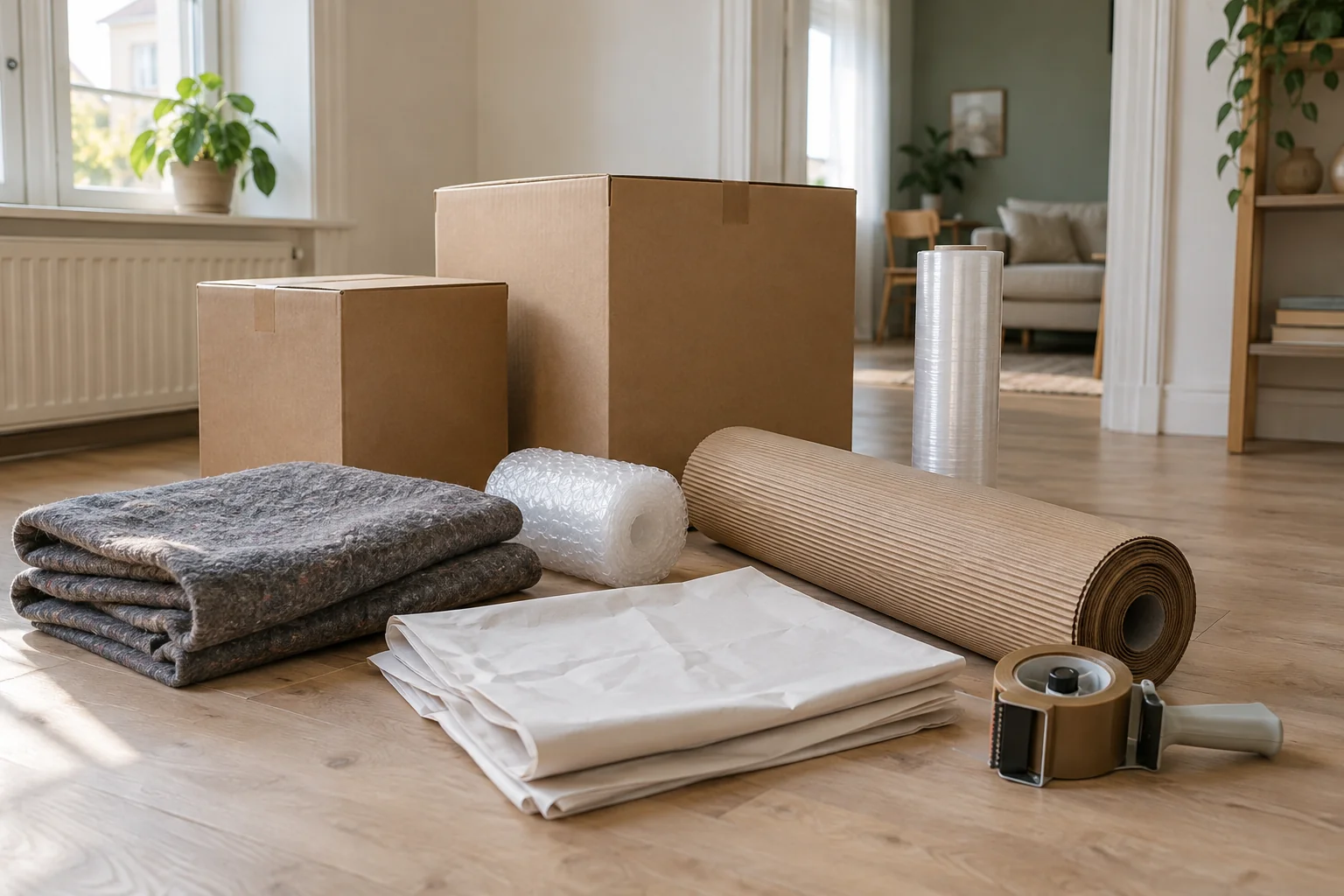
Buy for the task: a suitable soft contact layer, reinforcement at exposed edges and appropriate outer fastening. Film and tape hold packaging together; they do not replace cushioning or vehicle load restraint.
Where to buy moving boxes and packing materials in Copenhagen
Read article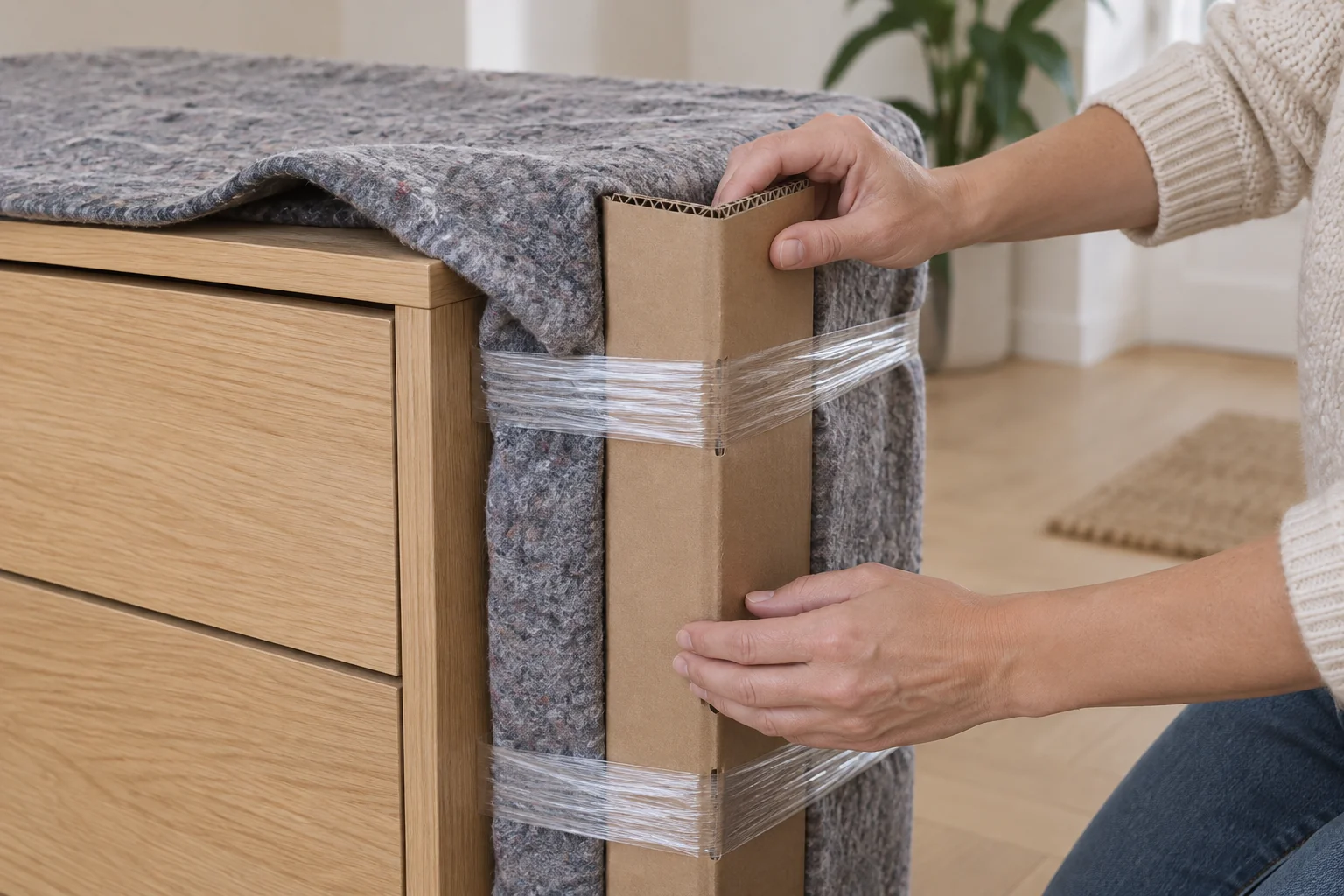
Furniture packing materials: wrap, cardboard, paper or blankets?
Read article
02 · Sofas and cabinets
Sofas, bedside cabinets and chests of drawers.
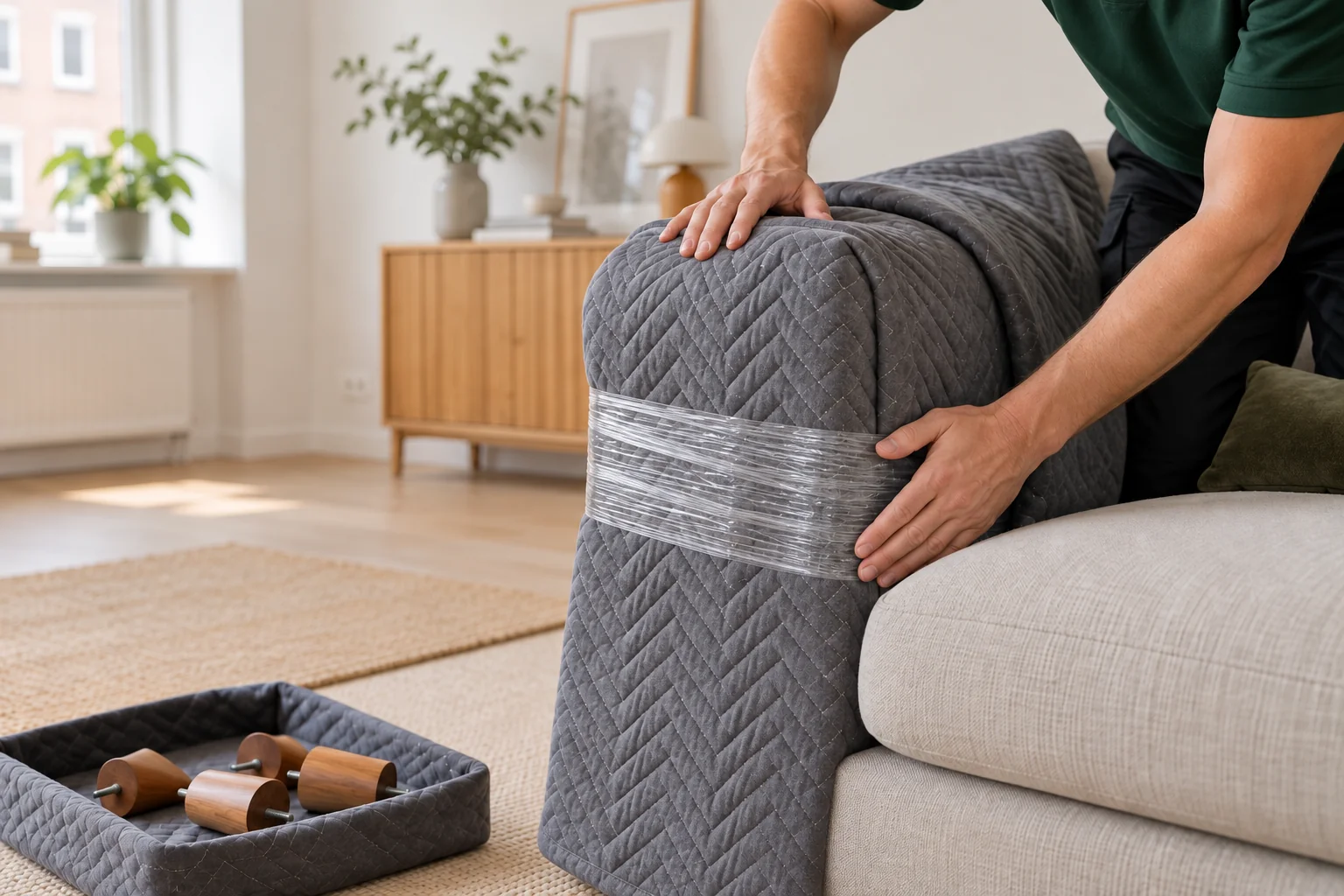
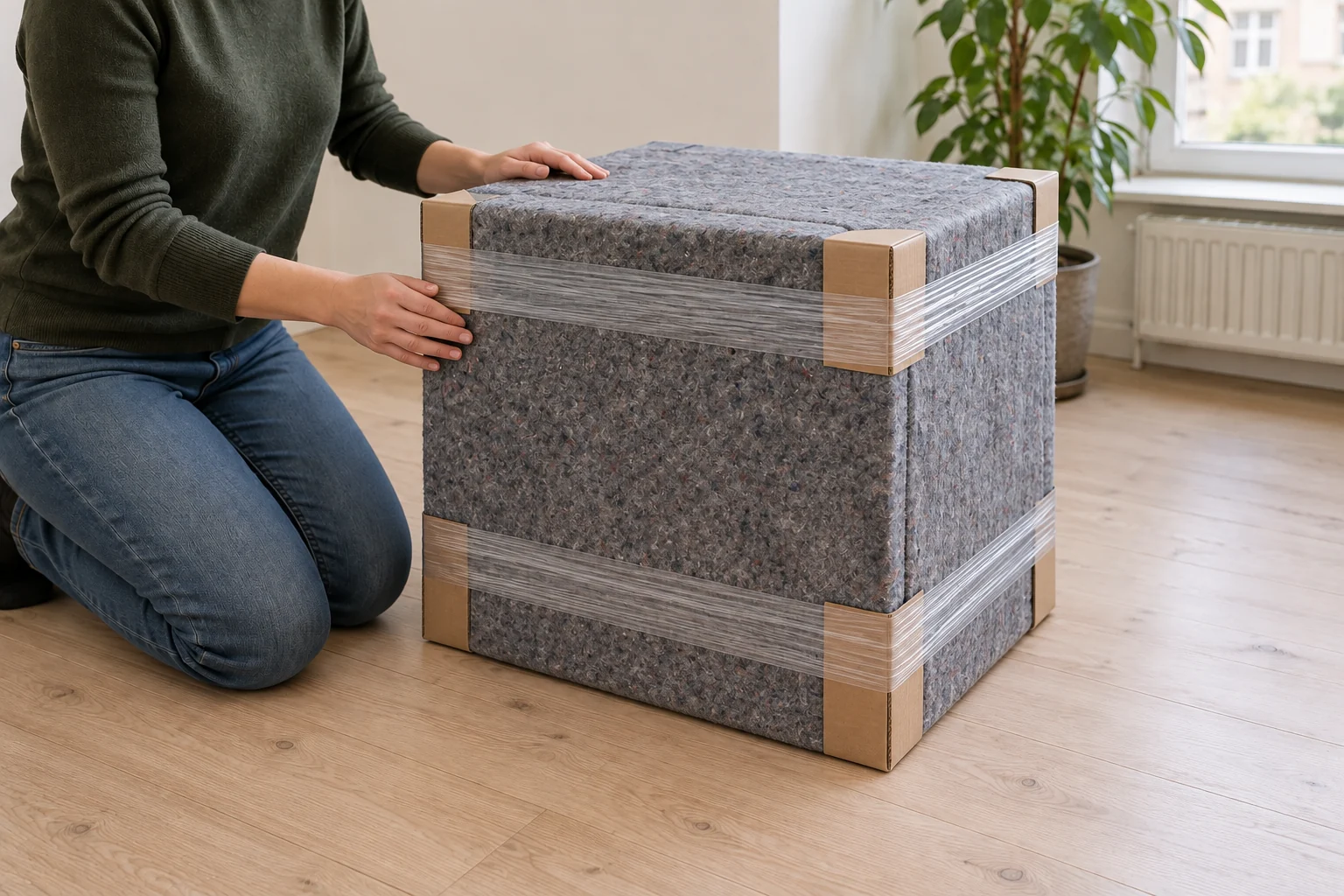
Sofa: detachable legs and cushions may need separate packages. Choose suitable protection for fabric or leather and reinforce exposed corners. Only dismantle parts as the model permits.
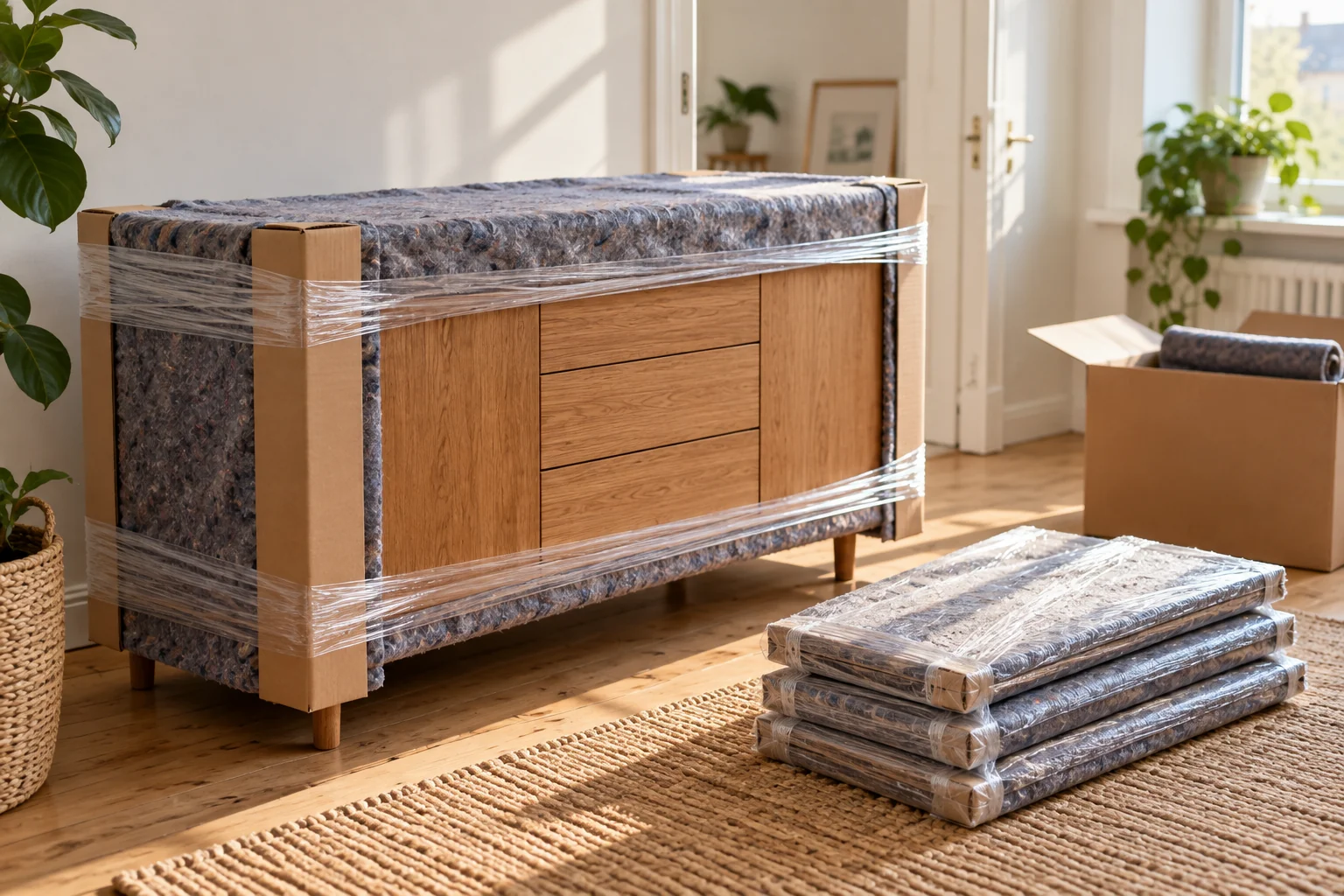
Cabinet or chest of drawers: empty drawers, collect loose parts and protect every face. A heavy chest can need different handling from the small bedside cabinet in the illustrated example.
03 · Beds and mattresses
The frame and mattress need different protection.
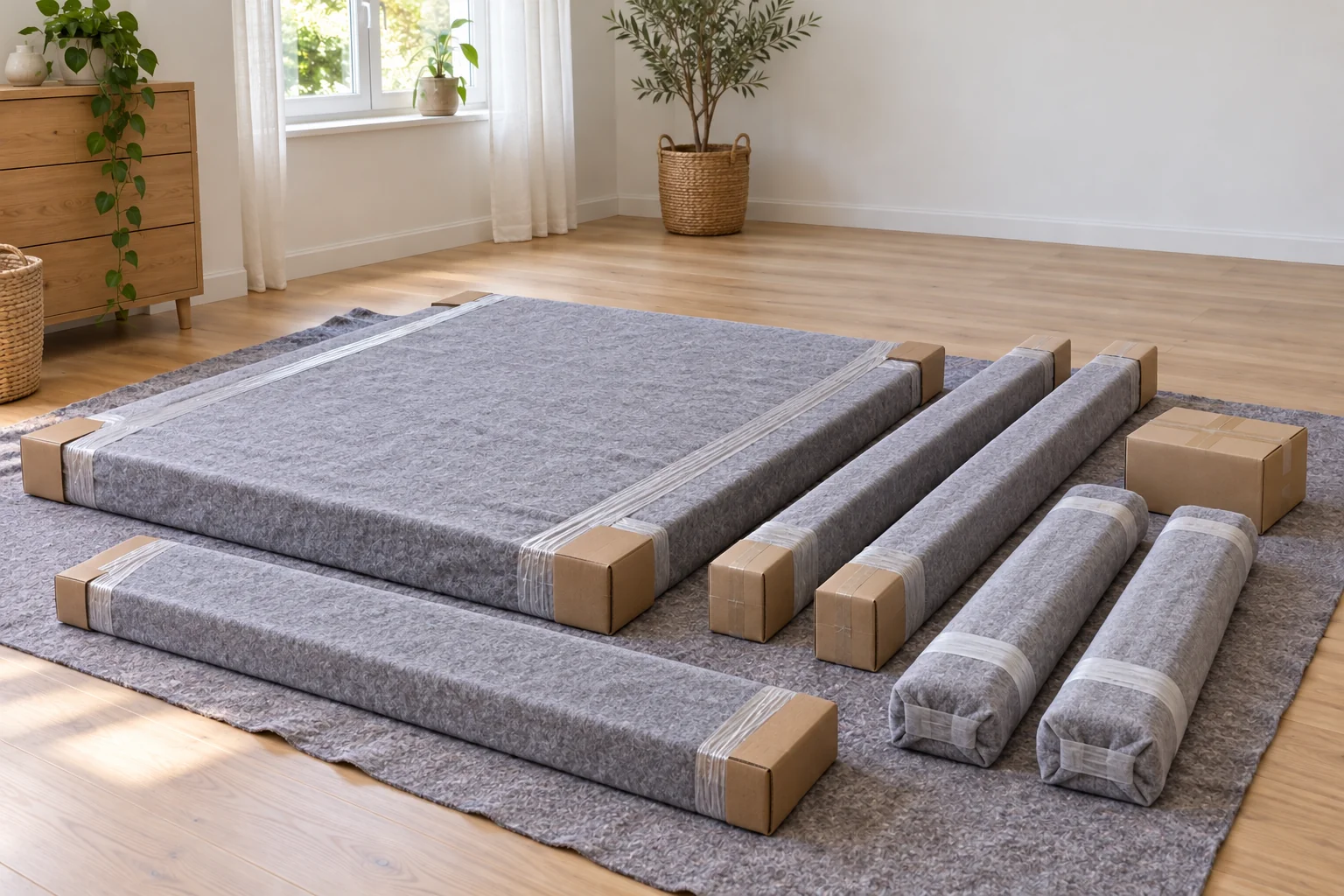
Bed frame: keep instructions and labelled fittings together. Protect headboards, side rails and slats as separate components when the construction is suitable for dismantling. Gas lifts, motors and other mechanisms need the exact model instructions.
Mattress: choose a cover using length, width and depth. Only enclose a clean, completely dry mattress. Follow manufacturer guidance on bending, rolling and transport position.
How to dismantle and pack a bed frame for moving
Read article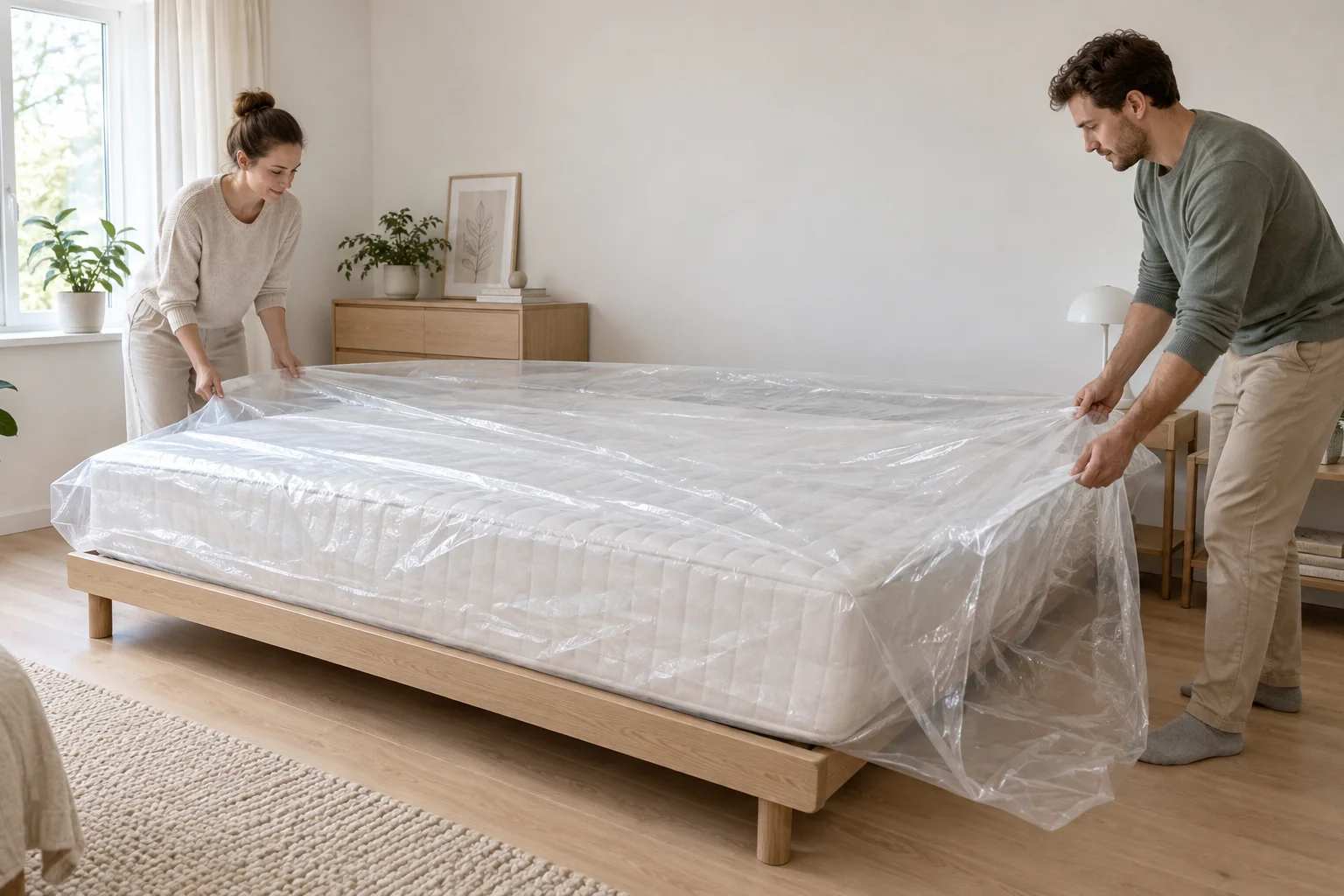
How to pack a mattress for moving
Read article
04 · Wardrobes and shelves
Assess the wardrobe before dismantling.
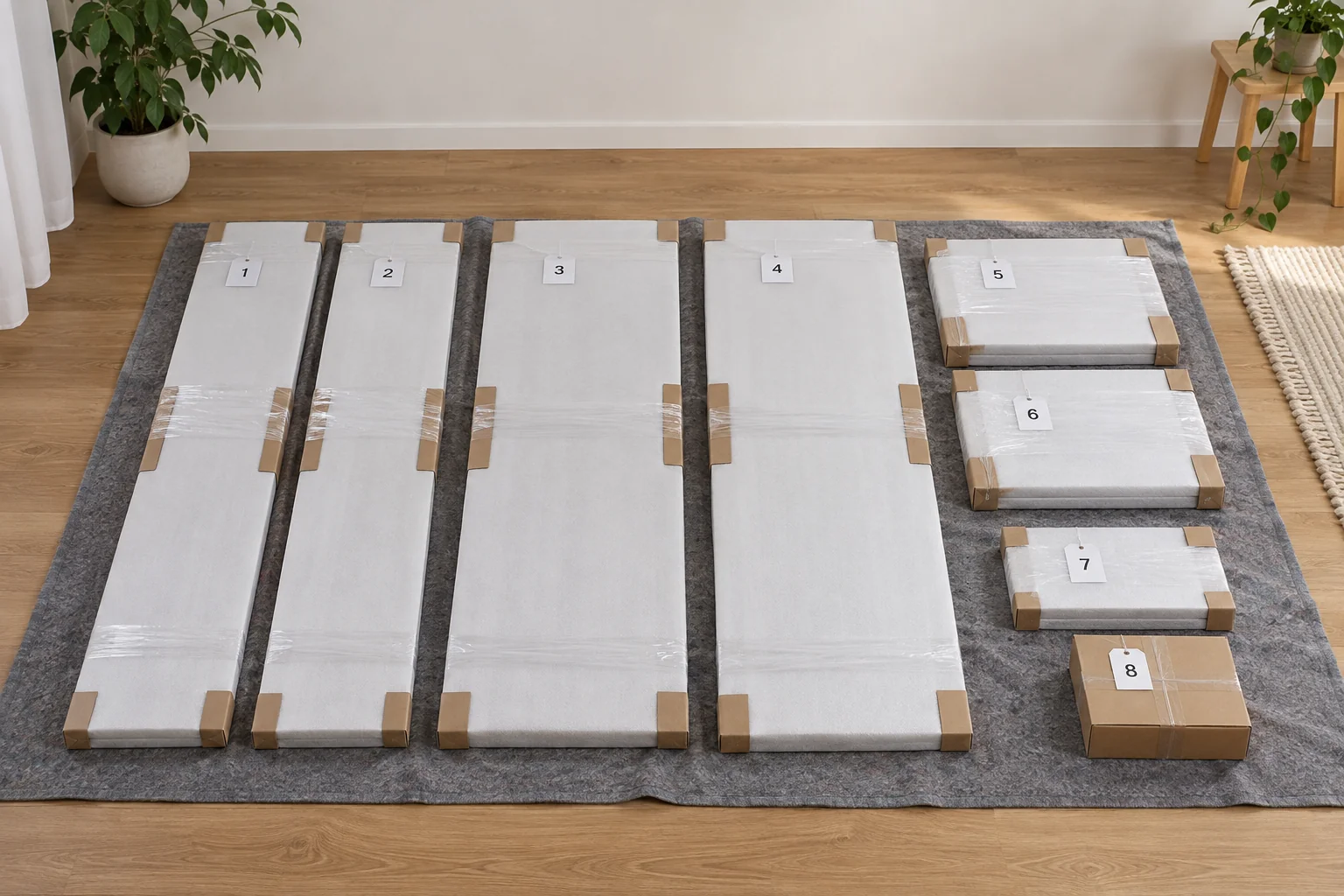
Check whether it can travel assembled or is suitable for disassembly. Empty it, label components and protect faces and edges individually. A thin back panel may be important to its stability.
Disclose mirrors and glass beforehand. Standard furniture wrapping may not be sufficient for a large glazed door.
05 · Rugs and dishes
Rugs, glasses and plates.
Rug: clean and dry it before choosing a rolling method suitable for the material and backing. Protect the entire roll including its ends.
Dishes: wrap each piece separately in an appropriate cushioned box. Distribute weight, use suitable compartments for fragile glasses and close the lid without pressing onto the contents.
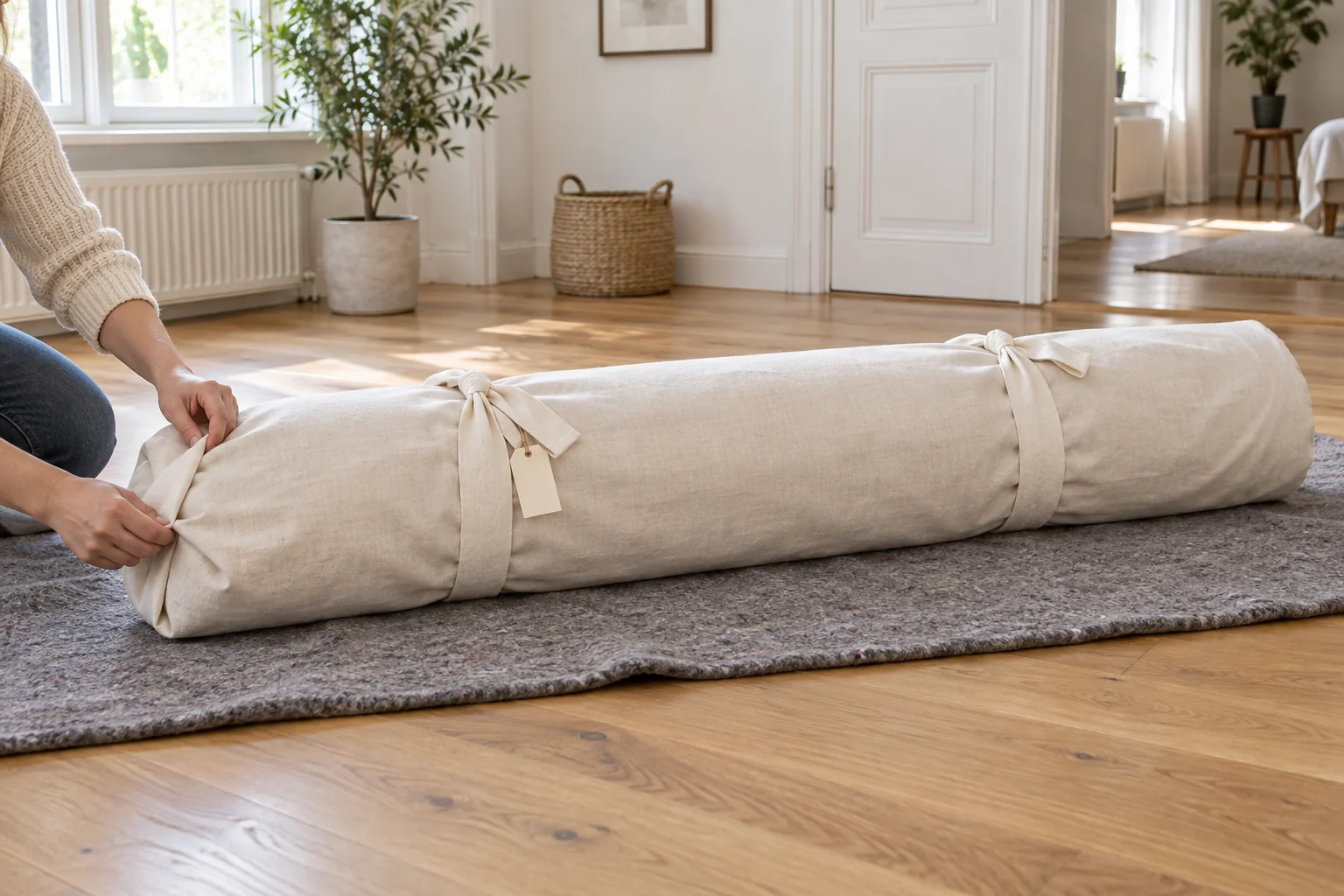
How to roll and pack a rug for moving
Read article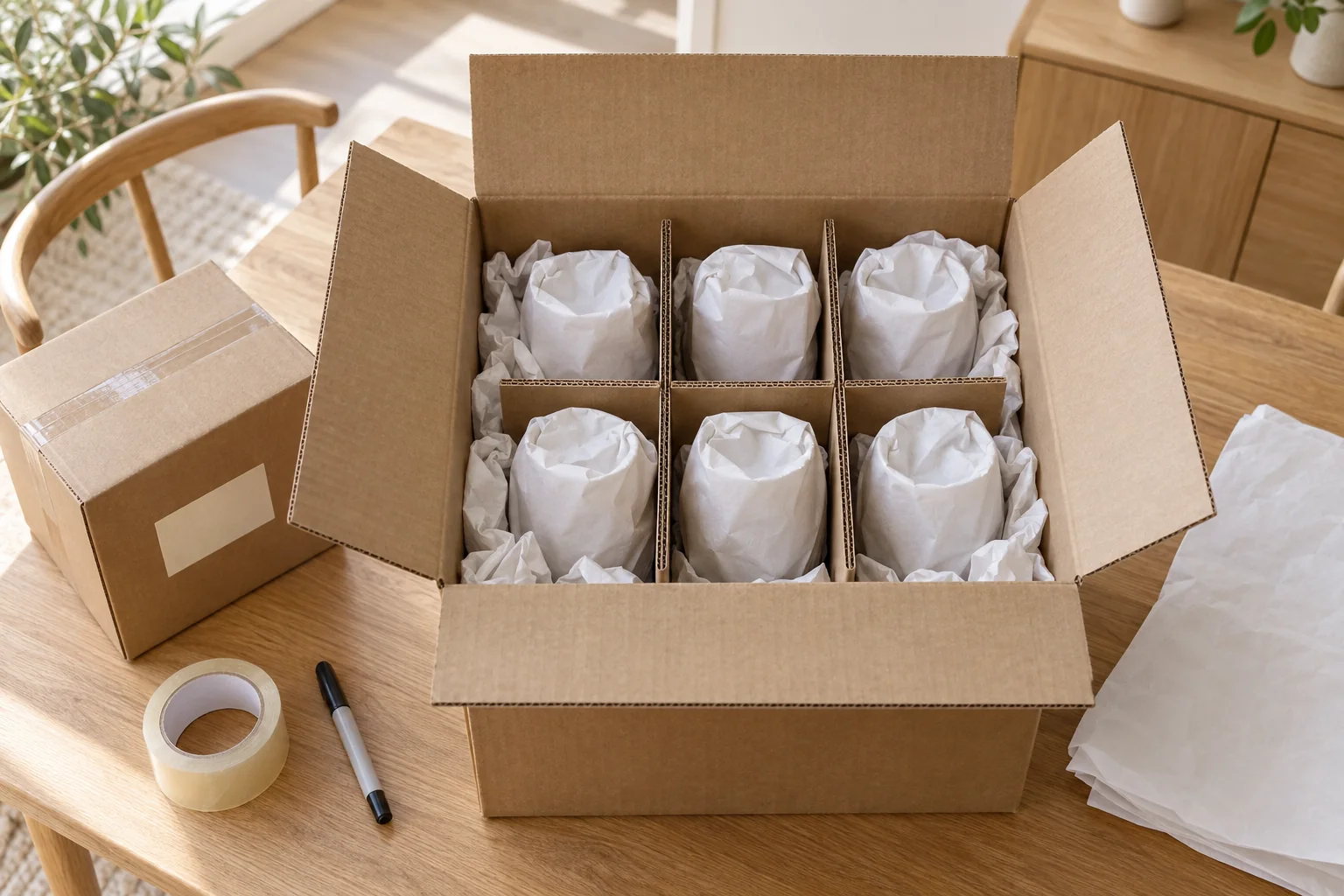
How to pack glasses, wine glasses and plates for moving
Read article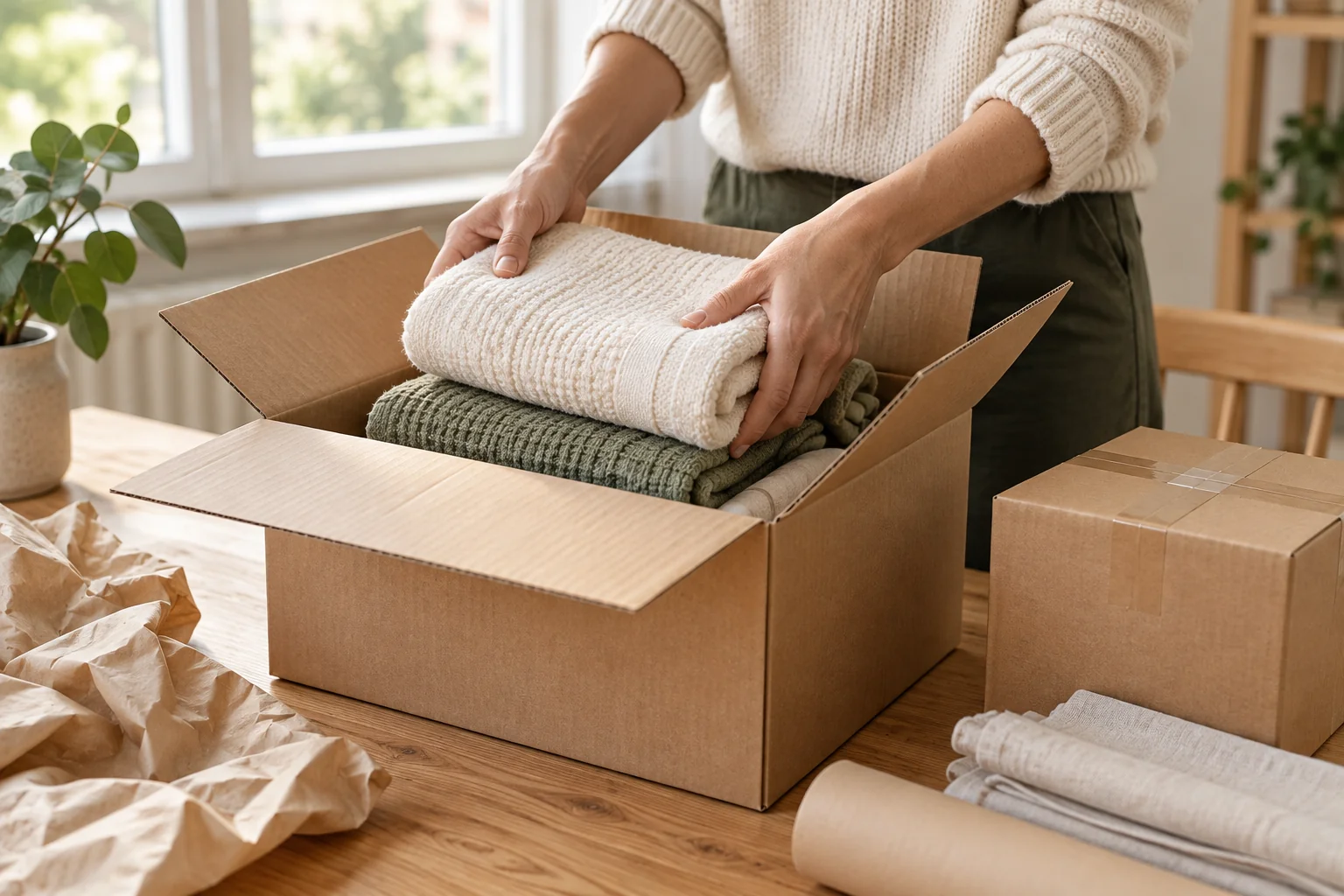
Pack your moving boxes with care
Read article
06 · Ready for collection
Check the packages and carrying route.
Look for exposed edges, loose drawers and wrapping that could slip off. Keep fittings away from sensitive surfaces. Label boxes with destination and contents, and keep instructions and important small parts accessible.
Clear the route at both addresses and arrange enough people. Do not use handles, packaging or decorative components as lifting points. The driver must plan safe positioning and restraint inside the vehicle.
07 · Help from Teleporter
Will you pack yourself or arrange assistance?
For a booking without packing, have belongings prepared. If you need packing, dismantling or reassembly, agree this with the manager beforehand. Assistance depends on the task and a suitable team being available.
For local per-minute jobs, agreed packing is working time. Materials used are charged as agreed. Vehicle blankets, straps and the trolley are available for the job and remain with the driver afterwards. Use your own materials or make an arrangement if protection must be ready before collection or stay on furniture after delivery.
08 · Questions
Questions before packing.
- Does all furniture need dismantling?No. Assess construction, condition, weight and access. Follow manufacturer instructions and do not force glued joints apart.
- Can film protect furniture on its own?It can hold protection together but is not a universal cushioning layer against impacts, scratches or pressure.
- Can the team finish packing on the day?Only by agreement and with suitable materials and skills available. Clarify the need before collection.
Ready for moving day?
One final review.
- Dimensions, access and manufacturer instructions are checked.
- Contents and detachable parts are packed separately.
- Faces, edges and corners have suitable protection.
- Fittings, instructions and destination labels are organised.
- Carrying help, packing and special items are agreed.
Have a good move — and a good start at your new address.
Back to the blog