

Packing
Protect your furniture.
Choose the right layers.
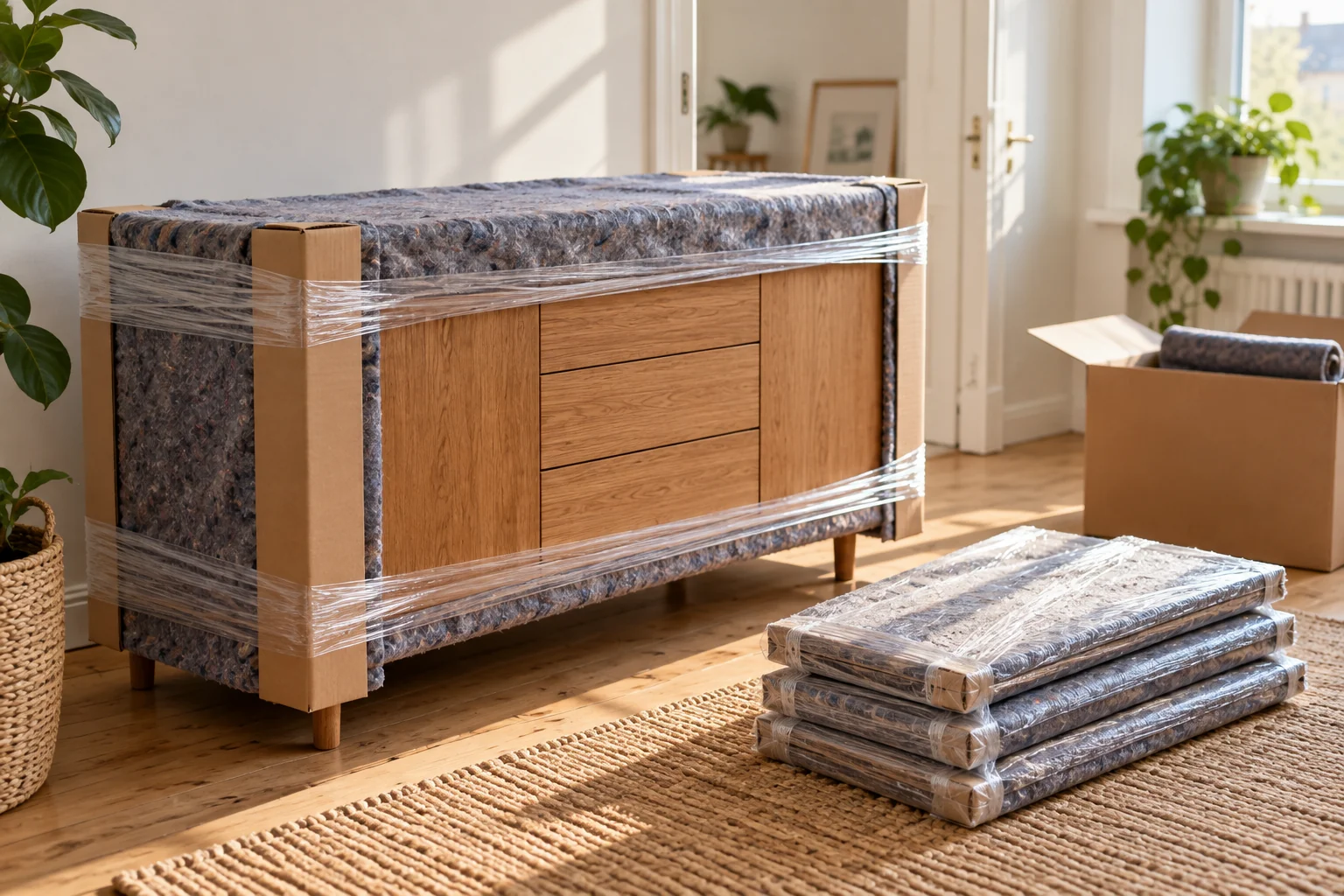
Use a soft layer against the surface, cardboard around exposed edges and film to hold the layers together. Keep tape on the wrapping, not the furniture.
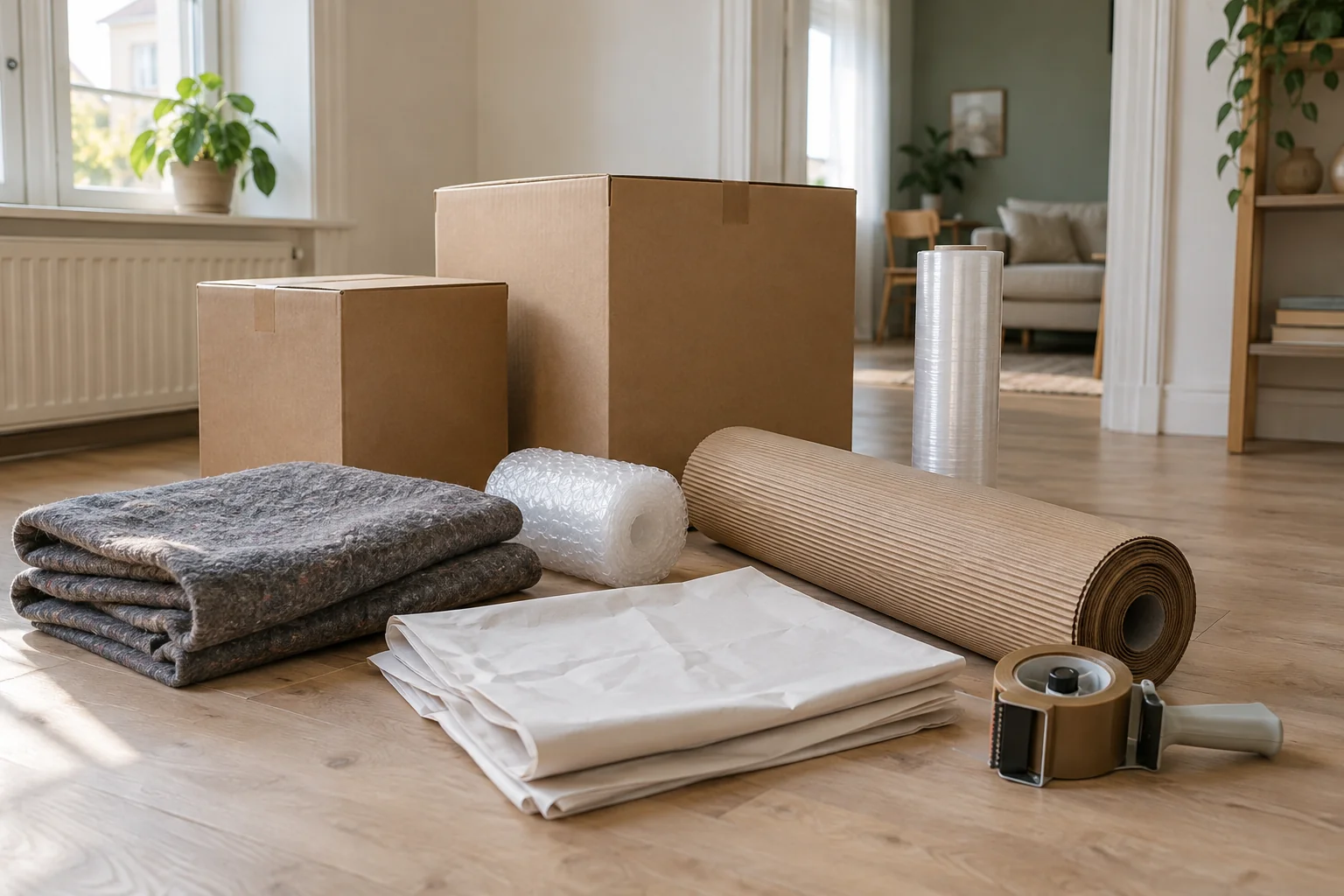
A clean, soft layer protects the finish; cushioning helps with minor knocks; cardboard reinforces vulnerable edges; stretch film holds the layers together. No single material does every job. Choose the combination for the furniture’s surface, shape and delicate parts.
The essentials, in brief.
- Stretch film holds protection in place; it does not replace padding.
- Apply tape to packaging, never directly to furniture finishes.
- Pack clean, dry items and follow the manufacturer’s guidance.
01 · Choose the layers
Start with what needs protecting.
A lacquered corner, an upholstered armrest and a wine glass need different treatment. Furniture surfaces need protection from rubbing and scratches. Protruding parts and edges may need extra cushioning. Objects inside a box need separation so they cannot collide.
Inspect the finish before packing. Loose paint, recent surface treatments, dampness and delicate finishes require particular care. Ask the manufacturer about material compatibility if uncertain. Adding plastic does not automatically make an item safer.
| Material | Useful for | Does not replace |
|---|---|---|
| Clean moving blanket | Soft surface protection | Edge protection and correct lifting |
| Bubble wrap / foam | Cushioning and separation | A strong box or rigid protection |
| Corrugated cardboard | Extra edge and panel protection | A soft layer against delicate finishes |
| Packing paper | Crockery, separation and gaps | Impact protection for large furniture |
| Stretch film | Securing other protective layers | Padding or a carrying strap |
| Packing tape | Closing and joining packaging | Safe protection of bare furniture |
02 · Surface protection
1. Begin with a clean, soft layer.
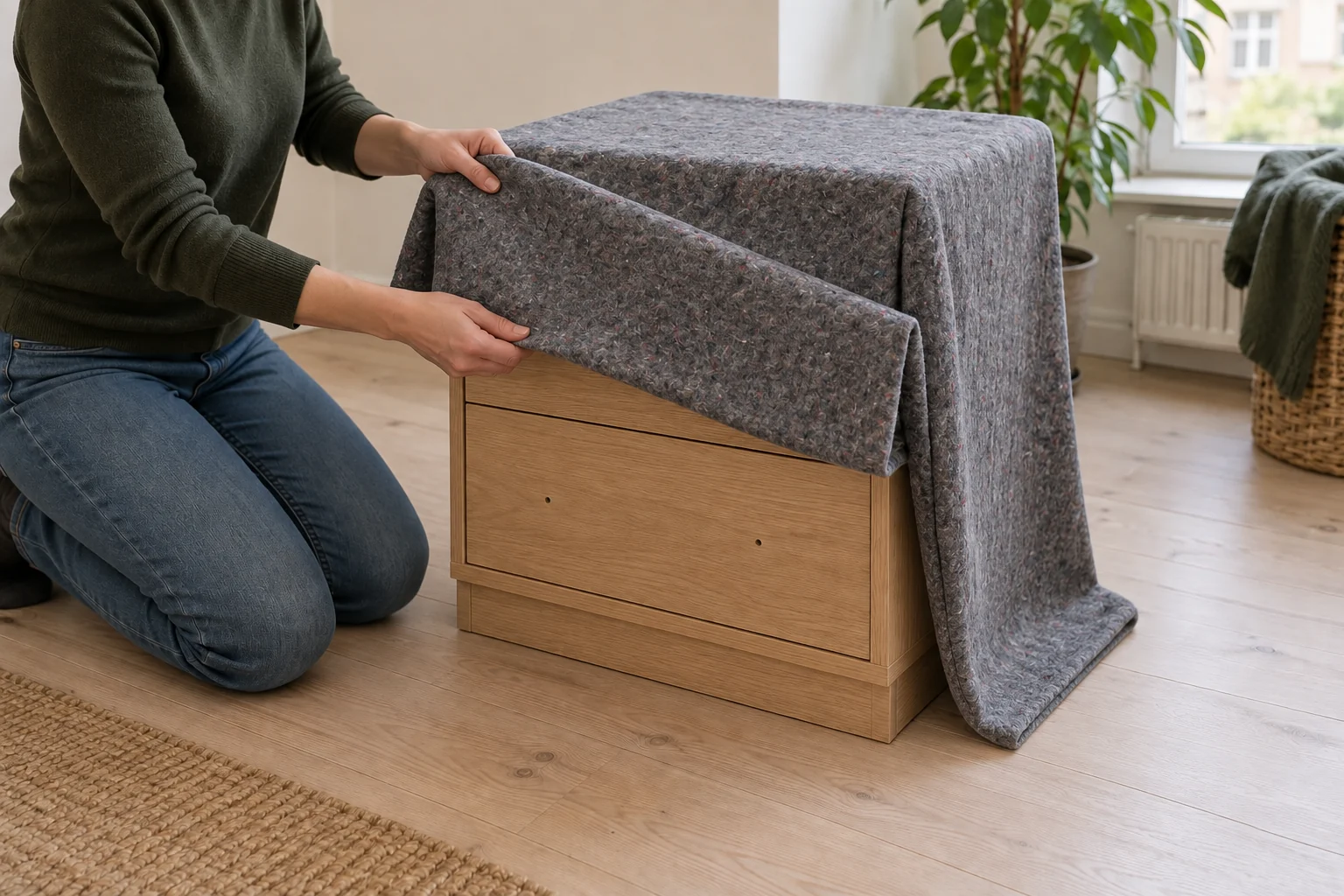
Use a clean, dry moving blanket or another suitable soft material. Check for grit, sharp debris and dampness before it touches the item. A blanket used on a dirty floor should not go directly against a delicate finish.
Cover vulnerable surfaces while keeping necessary lifting points usable and loose ends out of the carrying route. A blanket does not secure a loose handle, glass door or weak leg. Remove detachable parts where the construction permits.
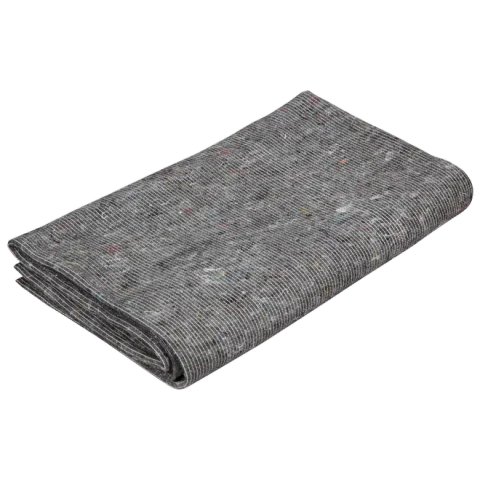
Harald Nyborg
Moving blanket
150 × 200 cm • 3 m²
Approx. DKK 18.75
Soft furniture protection. Make sure the blanket is clean and dry.
View product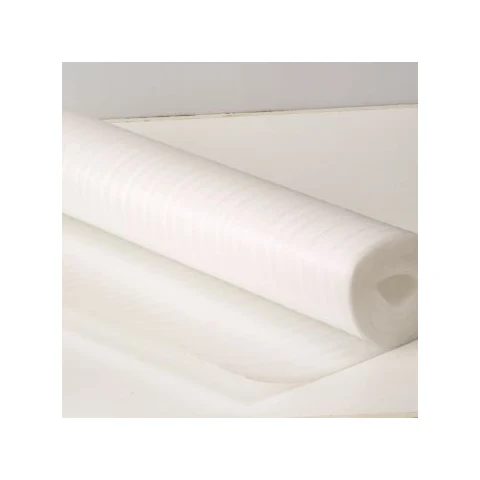
BAUHAUS
Foam wrap roll
1 × 10 m • 10 m²
Approx. DKK 139.95
Soft separating layer; check compatibility with the finish.
View product
Prices are approximate and may change. Check the retailer’s website for the current price and availability.
Product photos: the linked retailers.
03 · Edges and corners
2. Reinforce edges without crushing them.
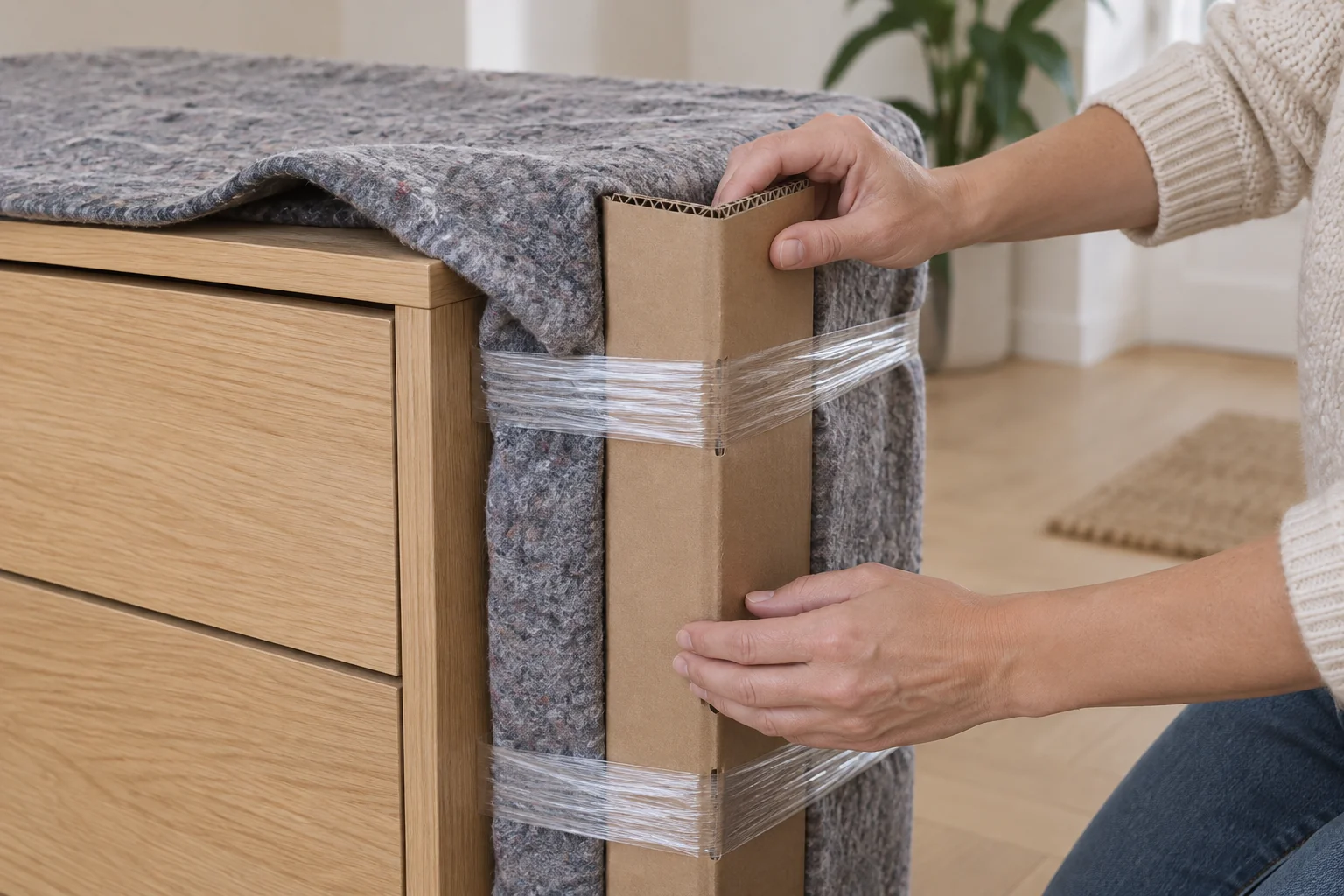
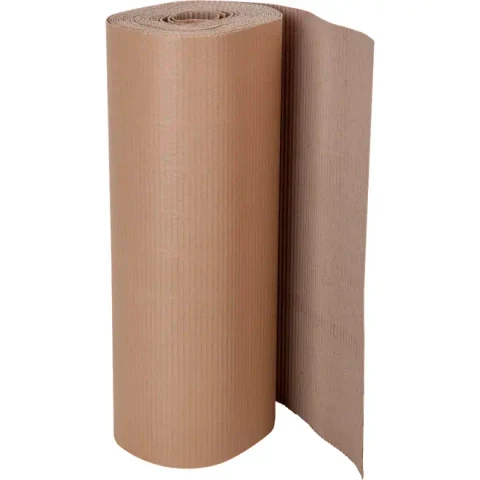
Shape corrugated cardboard or suitable corner protectors around exposed edges, outside the soft layer. The edge should not push through, and the protection must stay in place during handling.
A large panel may need rigid protection. Thin cardboard does not turn a mirror or glass panel into ordinary robust furniture. Describe these parts before booking and agree suitable packaging.
Prices are approximate and may change. Check the retailer’s website for the current price and availability.
Product photos: the linked retailers.
04 · Film and tape
3. Secure the protection.
Stretch film can keep blankets and cardboard from slipping during handling. Film alone does not protect a corner from impact. Use enough tension to hold the packaging without squeezing the furniture or upholstery.
Tape can secure paper and cardboard. Keep it on the packaging and away from wood, lacquer, veneer, leather and fabric. Do not lift by film or tape. Packed furniture must still be handled at points designed to bear its weight.
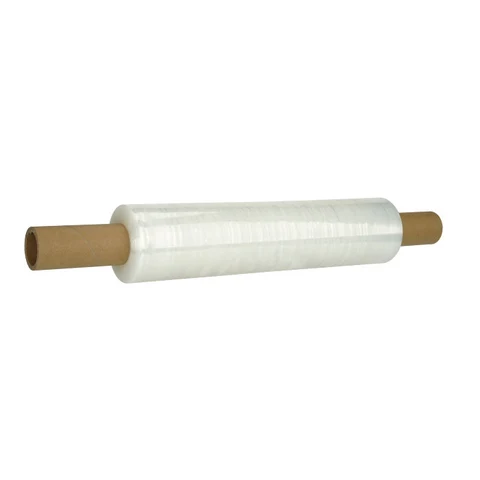
jem & fix
Wide stretch film
40 cm × 200 m • 23 μm
Approx. DKK 99.00
Holds blankets and cardboard together. It is not padding.
View product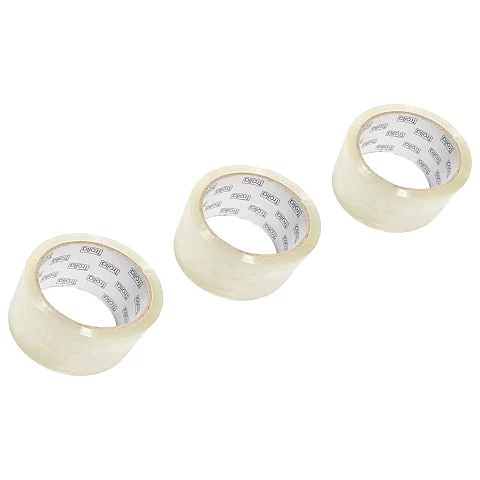
Bilka
Packing tape, three rolls
3 × 48 mm × 50 m
Approx. DKK 29.00
150 metres total. For boxes and packaging, not furniture finishes.
View product
Prices are approximate and may change. Check the retailer’s website for the current price and availability.
Product photos: the linked retailers.
05 · Smaller fragile items
Paper and bubbles work best around separate items.
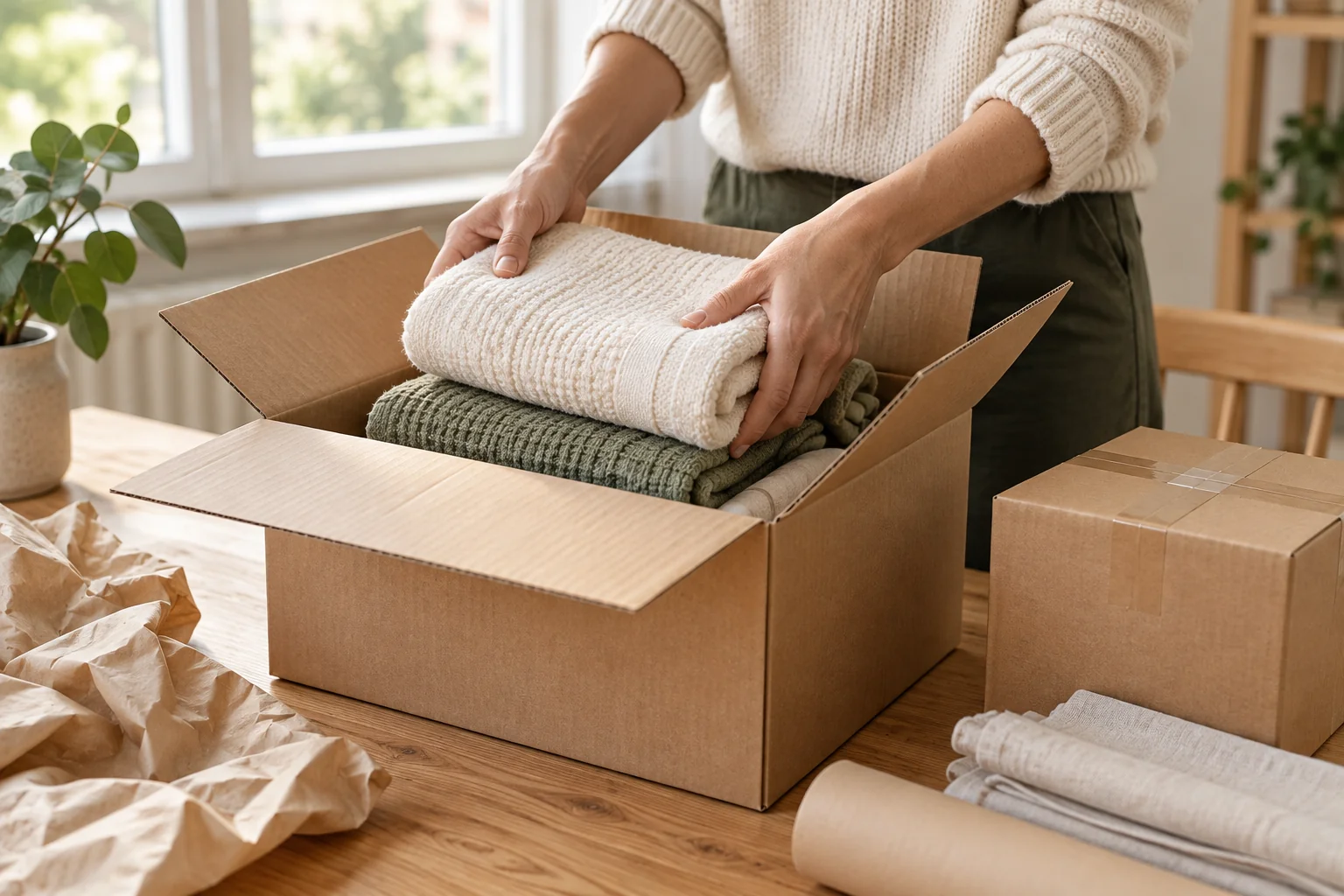
Packing paper is useful between plates and around small objects. Fill gaps to prevent movement without putting pressure on fragile parts. Use clean, unprinted paper where ink could transfer.
Bubble wrap can add cushioning around suitable parts. Match it to the item and its finish, using an appropriate separating layer where needed. It cannot compensate for a weak box, an unsecured base or excessive weight.
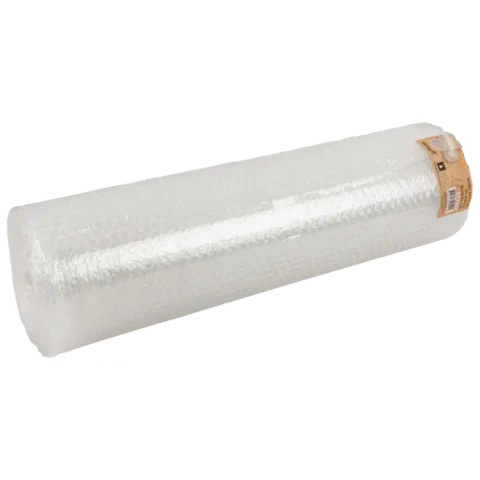
Harald Nyborg
Two-layer bubble wrap
50 cm × 10 m • 5 m²
Approx. DKK 25.00
A cushioning layer around suitable items.
View product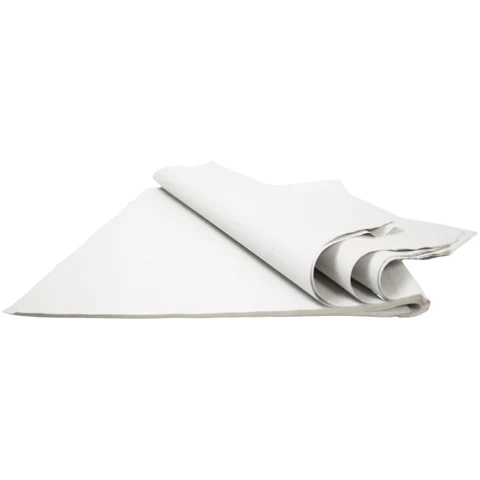
Silvan
Packing paper
150 × 40 × 60 cm
Approx. DKK 99.95
A smaller pack from Silvan as an additional option beyond the four chains.
View product
Prices are approximate and may change. Check the retailer’s website for the current price and availability.
Product photos: the linked retailers.
06 · Shopping and help
Arrange supplies before moving day.
The product cards show examples checked on 13 October 2026. Measure the furniture and allow for overlaps before choosing roll sizes. Reuse suitable materials when they remain clean, dry and intact.
Arrange Teleporter packing help with the manager in advance. We need to know the items and materials required, and a suitable team must be available. Under local per-minute pricing, packing takes paid working time; materials are charged as agreed for actual use.
07 · Questions
Questions about choosing materials.
- Can I just use stretch film on a sofa?Film secures protective layers but does not replace suitable protection for upholstery, armrests and corners.
- Can I use an old blanket?Yes, if it is clean, dry, compatible with the finish and free from hard or sharp parts. Check its thickness and coverage.
- Is this packaging suitable for months of storage?Not automatically. This guide covers moving. Long-term storage also needs consideration of ventilation, moisture and the manufacturer’s requirements.
Ready for moving day?
One final review.
- The finish’s requirements have been checked.
- Protection is clean and dry.
- Vulnerable edges have extra protection.
- Tape touches only packaging.
- The item can still be lifted safely.
Have a good move — and a good start at your new address.
Back to the blog