

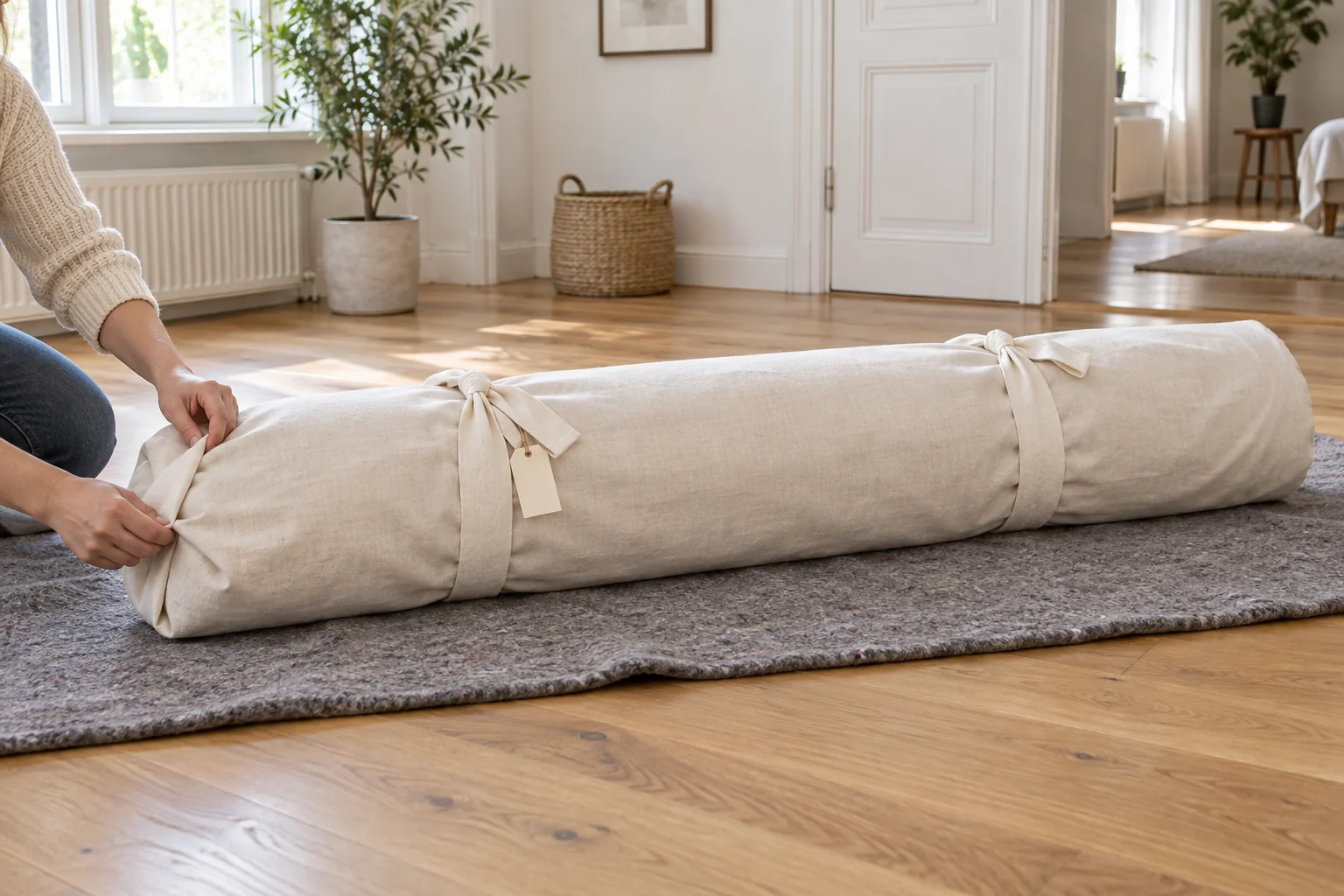
A rolled rug wrapped in fabric with its ends protected

Packing

Pack your rug.
Roll it with care.

Clean and dry the rug, roll it as its material requires, and protect the whole roll and both ends. Avoid sharp folds and tight cords.

Calculate your price
About 4 min readRead the guide
Published

An ordinary rug is usually packed as an even roll protected all around and at both ends. Clean and dry it first. Its material, pile and backing determine the rolling direction: follow the manufacturer's advice and have valuable or fragile rugs assessed before rolling them.

The essentials, in brief.

  • Only pack a completely dry rug.
  • Rolling direction depends on the rug's construction.
  • Protect both ends and avoid sharp bends.

01 · What you need

Choose wrapping for your particular rug.

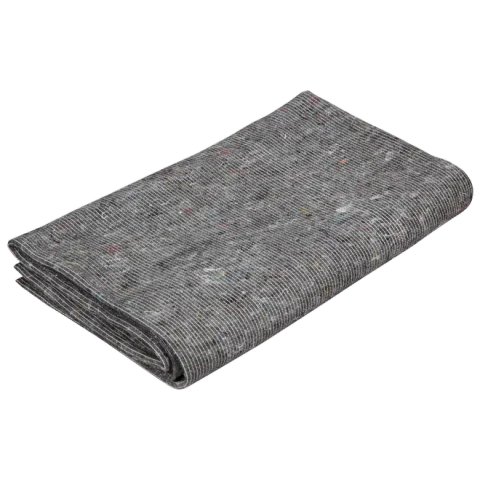
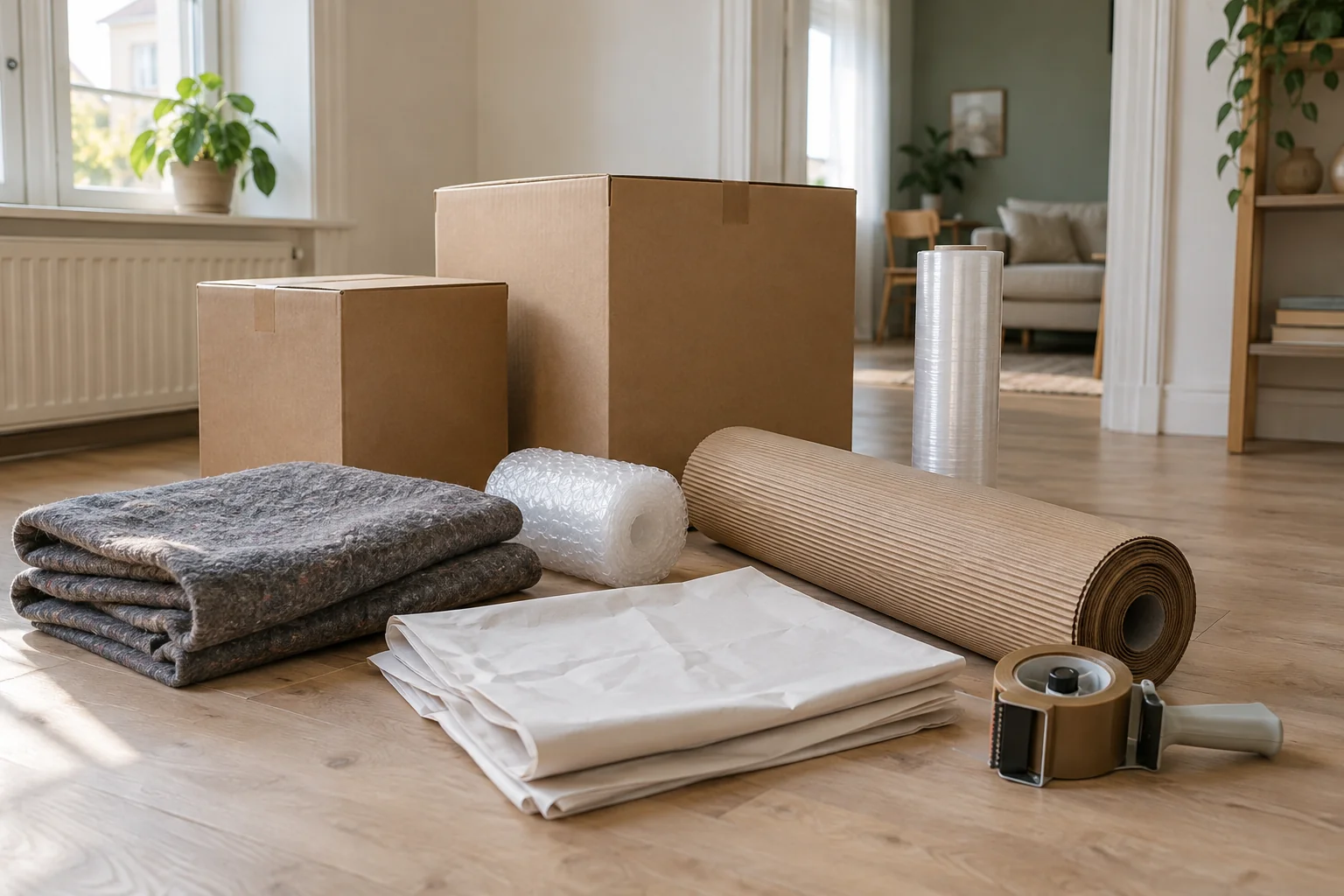
Measure the rug and estimate the size of the roll. You need a clean work surface, suitable outer protection and soft ties that hold the package together without squeezing it. A clean cotton sheet can provide dust protection if it covers the entire roll and both ends.

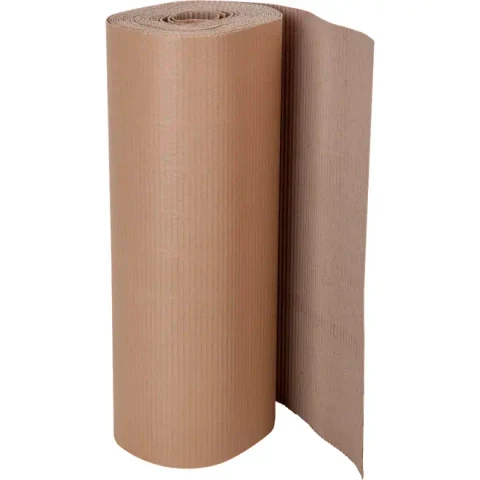
These examples include a moving blanket for a work surface or additional outer protection and cardboard for an outer protective layer. Neither replaces expert assessment of an antique or delicate rug. Prices are indicative, checked on 13 October 2026, and may change.
02 · Clean and dry

1. Prepare the rug before wrapping.

Follow its care instructions when vacuuming or cleaning. Check the backing, edges and fringes too. If you find damage or a brittle backing, stop and ask a rug specialist.

Arrange any wet cleaning well in advance. The rug must be completely dry before packing, not merely feel dry on the surface. Remove furniture and other obstacles so you have room to work without dragging it over sharp edges.

A clean rug being vacuumed before packing
Follow the care instructions and let all moisture dry out before wrapping. Step photos are AI-generated illustrations, not records of a customer job.

03 · Roll evenly

2. Choose the direction for its material and backing.

There is no single safe pile-in or pile-out rule for every rug. Check the manufacturer's guidance: stiff, hand-knotted and older rugs may need a different approach from an ordinary flexible rug.

Once you have established the right method, work slowly from a straight edge and keep the roll even. Avoid sharp folds and do not force a resistant backing. The picture shows an ordinary flat-woven rug as an example, not a method for every type.
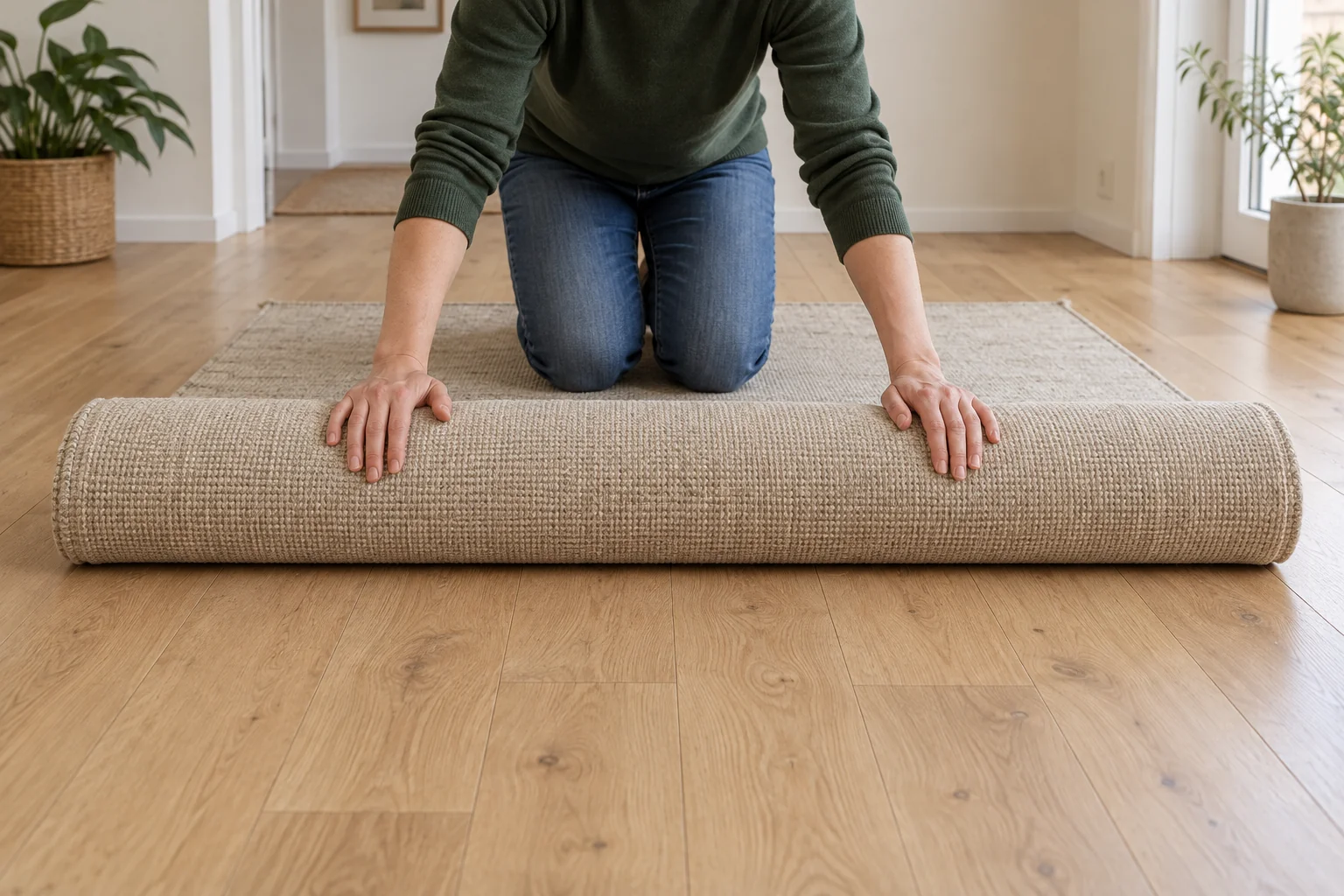
A flat-woven rug being rolled evenly on a clear floor
Roll slowly without sharp creases. Follow the instructions for the rug's construction.

04 · Cover the ends

3. Protect the whole roll.

Wrap the roll in the chosen protection and fold it over both ends. Secure it with soft ties without leaving pressure marks. Tape belongs on the wrapping, never on the rug fibres or backing.

Breathable wrapping matters if the rug will wait or go into storage. Sealed plastic can trap moisture and should not be the default for long-term storage. Keep the package out of rain during loading and unloading and remove temporary transport protection when no longer needed.

A rug roll covered with cotton fabric and secured with wide soft ties
Cover both ends and secure the wrapping without constricting the rug.

05 · Plan transport

4. Give the roll dimensions, not just the floor area.

A rug with a modest floor area can still become a long, heavy roll. Give its length, diameter and weight if known. Check that it can pass through doors and stair turns without folding.

Keep furniture legs and heavy boxes from pressing on the roll while it waits. Agree its placement and securing with the driver. The pictures show packing at home, not instructions for securing cargo in the vehicle.

06 · Help with the job

Arrange extra packing and special rugs beforehand.

Teleporter can transport a suitably packed rug as part of a move or as a separate job. If you want packing help, the manager must confirm the materials and an appropriate team in advance.

For local per-minute jobs, agreed packing and handling count as working time. Materials are charged as agreed. Send photos and the value if your rug is especially valuable or delicate so the job can be assessed. Specialist handling is not promised unless agreed.

07 · Questions

Questions about moving rugs.

  • Can I fold the rug to fit it in the vehicle?Not as a default. Sharp folds can strain its construction. Allow space for the recommended roll, or have another method approved for your rug.
  • Should the pile always face inwards?No. Its construction, condition and manufacturer's instructions determine the direction.
  • Can a freshly washed rug be packed the same day?Only if it is completely dry in accordance with its care instructions. Packing must not replace the necessary drying time.

Ready for moving day?

One final review.

  • The care instructions and rug condition have been checked.
  • The rug is completely dry.
  • The rolling direction and method suit its construction.
  • Both ends and the whole roll are protected.
  • The roll dimensions and any special requirements have been provided.
Find a vehicle and carrying help

Have a good move — and a good start at your new address.

Back to the blog
From plan to move

Ready for your
next move?

Calculate your price
Go to article

Get Teleporter

Choose your app store.

Welcome credit

GetDKK 100in credit when you sign up.

Open Messenger

Contact Teleporter

Choose language

Dansk

Packing

Pack your rug.
Roll it with care.

Clean and dry the rug, roll it as its material requires, and protect the whole roll and both ends. Avoid sharp folds and tight cords.

About 4 min readRead the guide
Published
A rolled rug wrapped in fabric with its ends protected

An ordinary rug is usually packed as an even roll protected all around and at both ends. Clean and dry it first. Its material, pile and backing determine the rolling direction: follow the manufacturer's advice and have valuable or fragile rugs assessed before rolling them.

The essentials, in brief.

  • Only pack a completely dry rug.
  • Rolling direction depends on the rug's construction.
  • Protect both ends and avoid sharp bends.

01 · What you need

Choose wrapping for your particular rug.

Measure the rug and estimate the size of the roll. You need a clean work surface, suitable outer protection and soft ties that hold the package together without squeezing it. A clean cotton sheet can provide dust protection if it covers the entire roll and both ends.

These examples include a moving blanket for a work surface or additional outer protection and cardboard for an outer protective layer. Neither replaces expert assessment of an antique or delicate rug. Prices are indicative, checked on 13 October 2026, and may change.

02 · Clean and dry

1. Prepare the rug before wrapping.

Follow its care instructions when vacuuming or cleaning. Check the backing, edges and fringes too. If you find damage or a brittle backing, stop and ask a rug specialist.

Arrange any wet cleaning well in advance. The rug must be completely dry before packing, not merely feel dry on the surface. Remove furniture and other obstacles so you have room to work without dragging it over sharp edges.

A clean rug being vacuumed before packing
Follow the care instructions and let all moisture dry out before wrapping. Step photos are AI-generated illustrations, not records of a customer job.

03 · Roll evenly

2. Choose the direction for its material and backing.

There is no single safe pile-in or pile-out rule for every rug. Check the manufacturer's guidance: stiff, hand-knotted and older rugs may need a different approach from an ordinary flexible rug.

Once you have established the right method, work slowly from a straight edge and keep the roll even. Avoid sharp folds and do not force a resistant backing. The picture shows an ordinary flat-woven rug as an example, not a method for every type.

A flat-woven rug being rolled evenly on a clear floor
Roll slowly without sharp creases. Follow the instructions for the rug's construction.

04 · Cover the ends

3. Protect the whole roll.

Wrap the roll in the chosen protection and fold it over both ends. Secure it with soft ties without leaving pressure marks. Tape belongs on the wrapping, never on the rug fibres or backing.

Breathable wrapping matters if the rug will wait or go into storage. Sealed plastic can trap moisture and should not be the default for long-term storage. Keep the package out of rain during loading and unloading and remove temporary transport protection when no longer needed.

A rug roll covered with cotton fabric and secured with wide soft ties
Cover both ends and secure the wrapping without constricting the rug.

05 · Plan transport

4. Give the roll dimensions, not just the floor area.

A rug with a modest floor area can still become a long, heavy roll. Give its length, diameter and weight if known. Check that it can pass through doors and stair turns without folding.

Keep furniture legs and heavy boxes from pressing on the roll while it waits. Agree its placement and securing with the driver. The pictures show packing at home, not instructions for securing cargo in the vehicle.

06 · Help with the job

Arrange extra packing and special rugs beforehand.

Teleporter can transport a suitably packed rug as part of a move or as a separate job. If you want packing help, the manager must confirm the materials and an appropriate team in advance.

For local per-minute jobs, agreed packing and handling count as working time. Materials are charged as agreed. Send photos and the value if your rug is especially valuable or delicate so the job can be assessed. Specialist handling is not promised unless agreed.

07 · Questions

Questions about moving rugs.

  • Can I fold the rug to fit it in the vehicle?Not as a default. Sharp folds can strain its construction. Allow space for the recommended roll, or have another method approved for your rug.
  • Should the pile always face inwards?No. Its construction, condition and manufacturer's instructions determine the direction.
  • Can a freshly washed rug be packed the same day?Only if it is completely dry in accordance with its care instructions. Packing must not replace the necessary drying time.

Ready for moving day?

One final review.

  • The care instructions and rug condition have been checked.
  • The rug is completely dry.
  • The rolling direction and method suit its construction.
  • Both ends and the whole roll are protected.
  • The roll dimensions and any special requirements have been provided.
Find a vehicle and carrying help

Have a good move — and a good start at your new address.

Back to the blog
From a good plan
to a good move.