


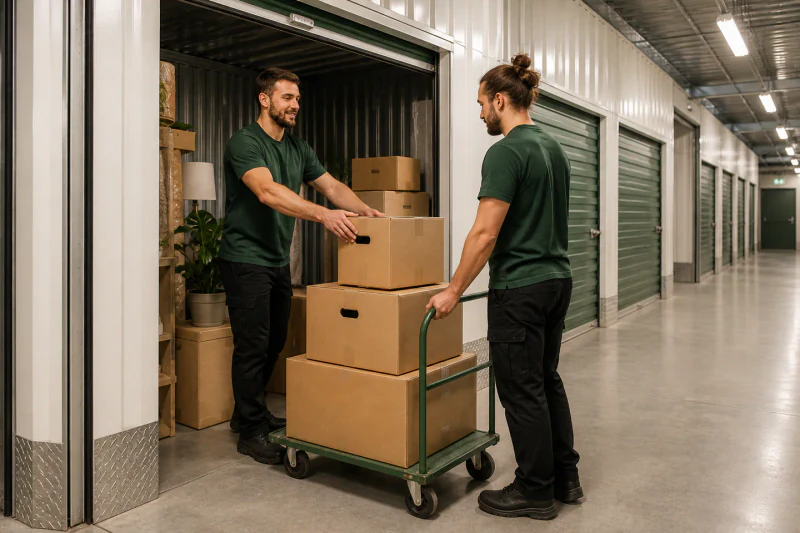
Illustration of moving boxes prepared for transport and storage

Packing

Pack your moving boxes
with care.

Small boxes for heavy items, clear labels on the side and simple choices that make unpacking easier.

Calculate your price
About 3 min readRead the guide

Good packing is not about fitting as much as possible into every box. It is about making belongings manageable to carry, transport and find again. A few consistent choices create calm before and after moving day.

The essentials, in brief.

  • Use small boxes for heavy items and large boxes for light items.
  • Label the side of every box with its room and contents.
  • Pack a separate bag for the first day.

01 · Choose boxes

Match the box size to its contents.

A moving box should be practical to lift, not merely easy to fill. Use smaller boxes for books, tableware and other heavy belongings. Save larger boxes for duvets, clothes and light items so the weight does not surprise the person carrying it.

Check the base before you start and close the box when it is packed. Fill empty spaces with suitable packing material so the contents cannot move freely during transport. Do not leave items protruding above the edge.

02 · Pack by room

Give every box one clear destination.

Pack one room at a time whenever possible. It keeps related belongings together and makes it easier to place boxes correctly at the new address.

Write both the room and a short description of the contents on the side. A label on top may be hidden when boxes are stacked. Use the same room names on the boxes as you use in the new home.

  • KitchenKeep tableware and kitchen equipment together, but spread heavy items across several boxes.
  • BedroomKeep bedding and the first change of clothes easy to reach.
  • BathroomClose containers securely and pack them upright in a separate box.

03 · Protect contents

Pack fragile items so they do not meet each other.

Wrap fragile items individually in suitable material and place a protective layer between them. Fill empty areas without squeezing the contents together. Mark the box clearly so it receives the necessary care.

Keep liquids, cleaning products and anything that could leak away from textiles and electronics. Consider which personal or valuable items you would rather keep close during the move.
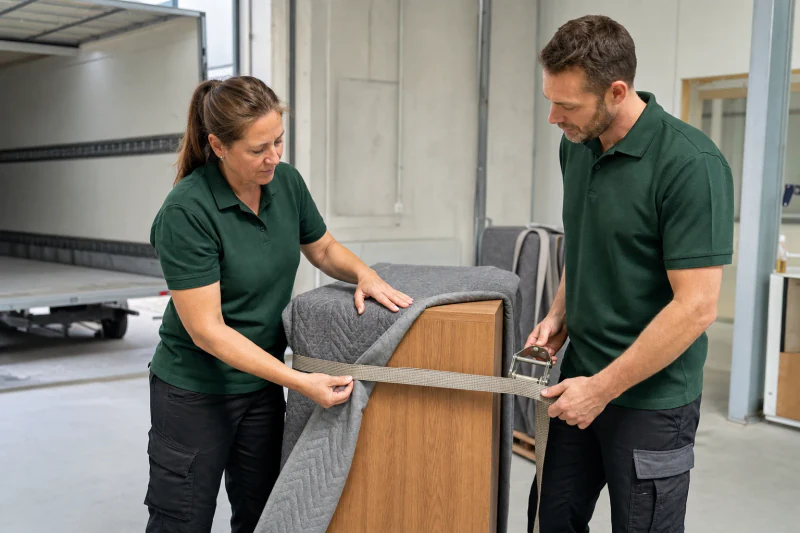
Illustration of movers protecting furniture with a moving blanket
Clear labelling and suitable protection make transport and unpacking easier.

04 · First day

Keep the essentials outside the moving load.

Pack a separate bag or box with keys, chargers, medicine, toiletries, a little kitchen equipment and what you need on the first evening. It should not end up at the back of the vehicle.

Finish with a simple box count. It helps you describe the job and check that everything arrives. Look through storage rooms, lofts and cupboards before closing the last box.

Ready for moving day?

One final review.

  • Every box has a stable, securely closed base.
  • Heavy items are spread across smaller boxes.
  • The room and contents are written on the side.
  • Fragile contents are protected and clearly marked.
  • First-day essentials are packed separately.
Find a vehicle and carrying help

Have a good move — and a good start at your new address.

Back to the blog
From plan to move

Ready for your
next move?

Calculate your price
Go to article

Get Teleporter

Choose your app store.

Welcome credit

GetDKK 100in credit when you sign up.

Open Messenger

Contact Teleporter

Choose language

Dansk

Packing

Pack your moving boxes
with care.

Small boxes for heavy items, clear labels on the side and simple choices that make unpacking easier.

About 3 min readRead the guide
Illustration of moving boxes prepared for transport and storage

Good packing is not about fitting as much as possible into every box. It is about making belongings manageable to carry, transport and find again. A few consistent choices create calm before and after moving day.

The essentials, in brief.

  • Use small boxes for heavy items and large boxes for light items.
  • Label the side of every box with its room and contents.
  • Pack a separate bag for the first day.

01 · Choose boxes

Match the box size to its contents.

A moving box should be practical to lift, not merely easy to fill. Use smaller boxes for books, tableware and other heavy belongings. Save larger boxes for duvets, clothes and light items so the weight does not surprise the person carrying it.

Check the base before you start and close the box when it is packed. Fill empty spaces with suitable packing material so the contents cannot move freely during transport. Do not leave items protruding above the edge.

02 · Pack by room

Give every box one clear destination.

Pack one room at a time whenever possible. It keeps related belongings together and makes it easier to place boxes correctly at the new address.

Write both the room and a short description of the contents on the side. A label on top may be hidden when boxes are stacked. Use the same room names on the boxes as you use in the new home.

  • KitchenKeep tableware and kitchen equipment together, but spread heavy items across several boxes.
  • BedroomKeep bedding and the first change of clothes easy to reach.
  • BathroomClose containers securely and pack them upright in a separate box.

03 · Protect contents

Pack fragile items so they do not meet each other.

Wrap fragile items individually in suitable material and place a protective layer between them. Fill empty areas without squeezing the contents together. Mark the box clearly so it receives the necessary care.

Keep liquids, cleaning products and anything that could leak away from textiles and electronics. Consider which personal or valuable items you would rather keep close during the move.

Illustration of movers protecting furniture with a moving blanket
Clear labelling and suitable protection make transport and unpacking easier.

04 · First day

Keep the essentials outside the moving load.

Pack a separate bag or box with keys, chargers, medicine, toiletries, a little kitchen equipment and what you need on the first evening. It should not end up at the back of the vehicle.

Finish with a simple box count. It helps you describe the job and check that everything arrives. Look through storage rooms, lofts and cupboards before closing the last box.

Ready for moving day?

One final review.

  • Every box has a stable, securely closed base.
  • Heavy items are spread across smaller boxes.
  • The room and contents are written on the side.
  • Fragile contents are protected and clearly marked.
  • First-day essentials are packed separately.
Find a vehicle and carrying help

Have a good move — and a good start at your new address.

Back to the blog

From a good plan
to a good move.