


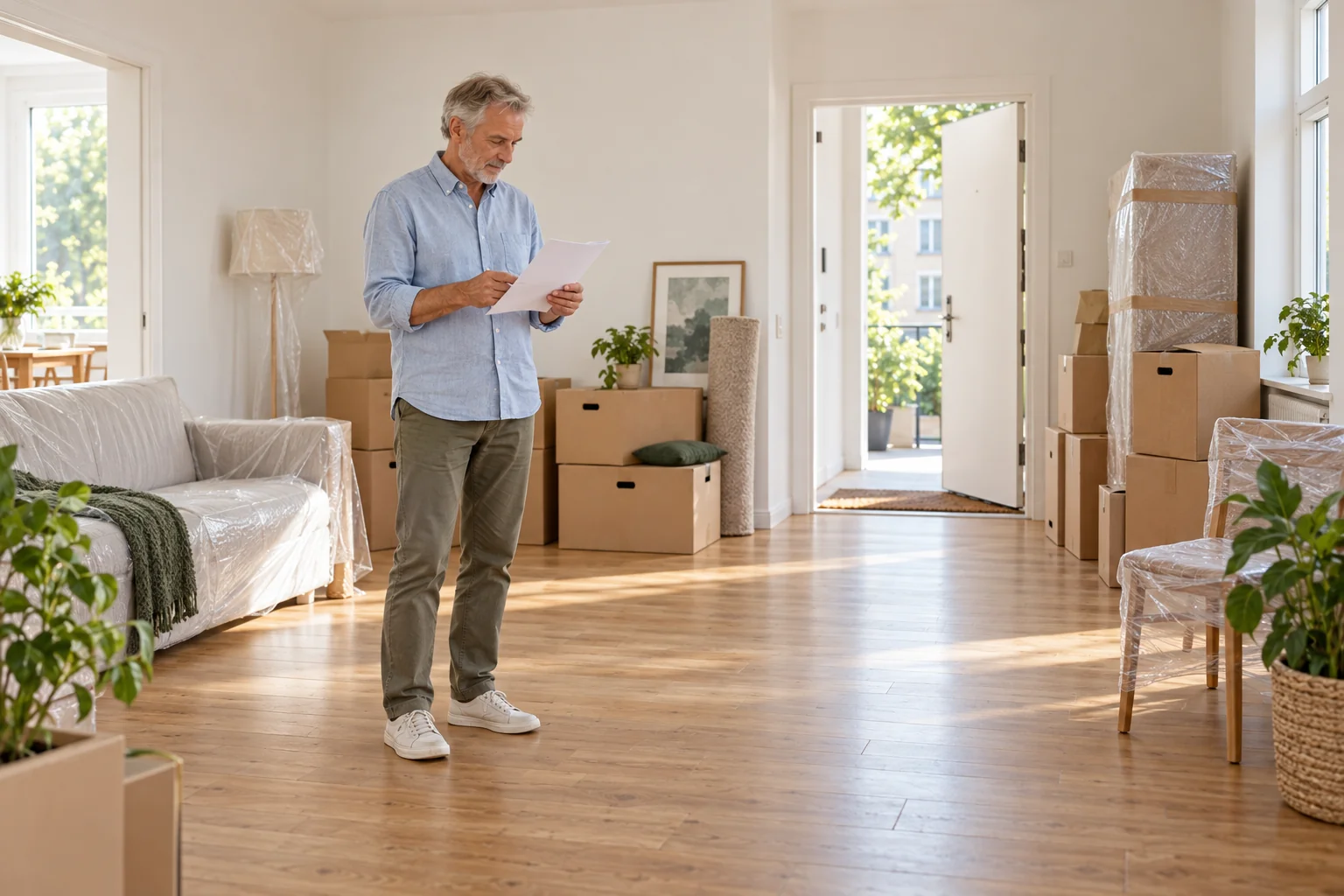
A man checks his moving list in a packed apartment with a clear walkway

Planning

Your move.
A clear overview.

From the first packed box to the final trip. Here is what to organise before moving day begins.

Calculate your price
About 4 min readRead the guide
Published

A good moving day starts before the first box leaves your home. You do not need a complicated plan, just an overview of your belongings, access and who is doing what. Use this practical guide one step at a time.

The essentials, in brief.

  • Understand the amount to move and the access.
  • Pack by room and keep essentials separate.
  • Arrange transport and help before the day starts.

01 · Make an inventory

Start with what is coming with you.

Walk through your home and list the large items: sofa, bed, dining table, wardrobes and shelves. Add an estimate of the number of boxes. The list does not have to be perfect; it should make the job easier to explain and plan.

Divide your belongings into three groups: things to take, things to give away and things to sort out for disposal. Decide early so you are not packing around items without a destination.

02 · Check access

Measure more than the furniture.

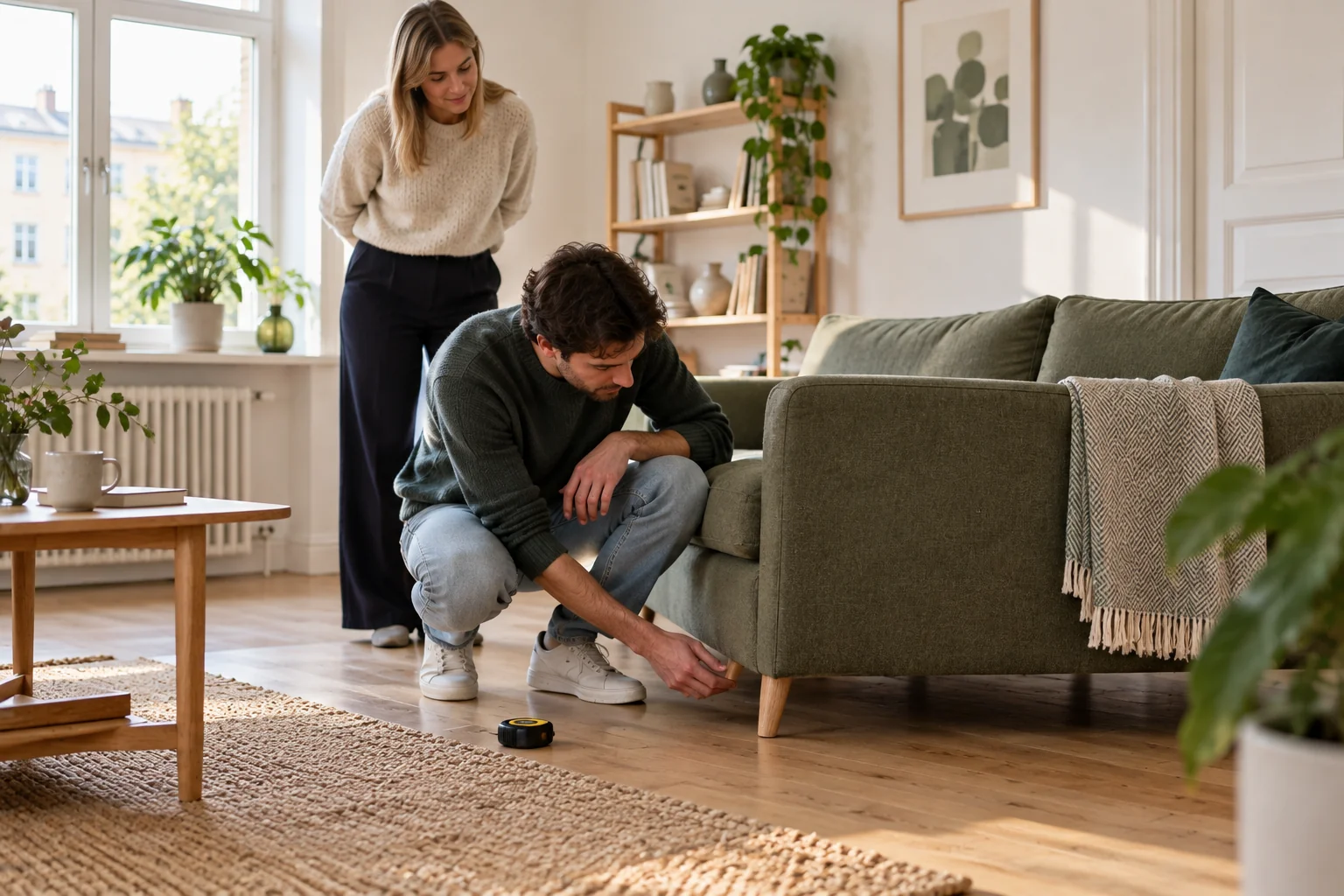
A sofa may fit perfectly in your new living room but still struggle to get through the door. Measure the furniture and narrow points on its way out and in. Check doorways, stair turns and lift openings at both addresses.

Find out where the vehicle can park and how far everything must be carried. A long courtyard or several floors without a lift matters when planning transport and carrying help.

  • At collectionNote the floor, lift, entrance access and distance to the vehicle.
  • At deliveryMake sure you have the keys and a clear route to the rooms.
  • For large furnitureCheck beforehand whether legs, shelves or other parts can be removed.

03 · Pack carefully

Make unpacking easier.

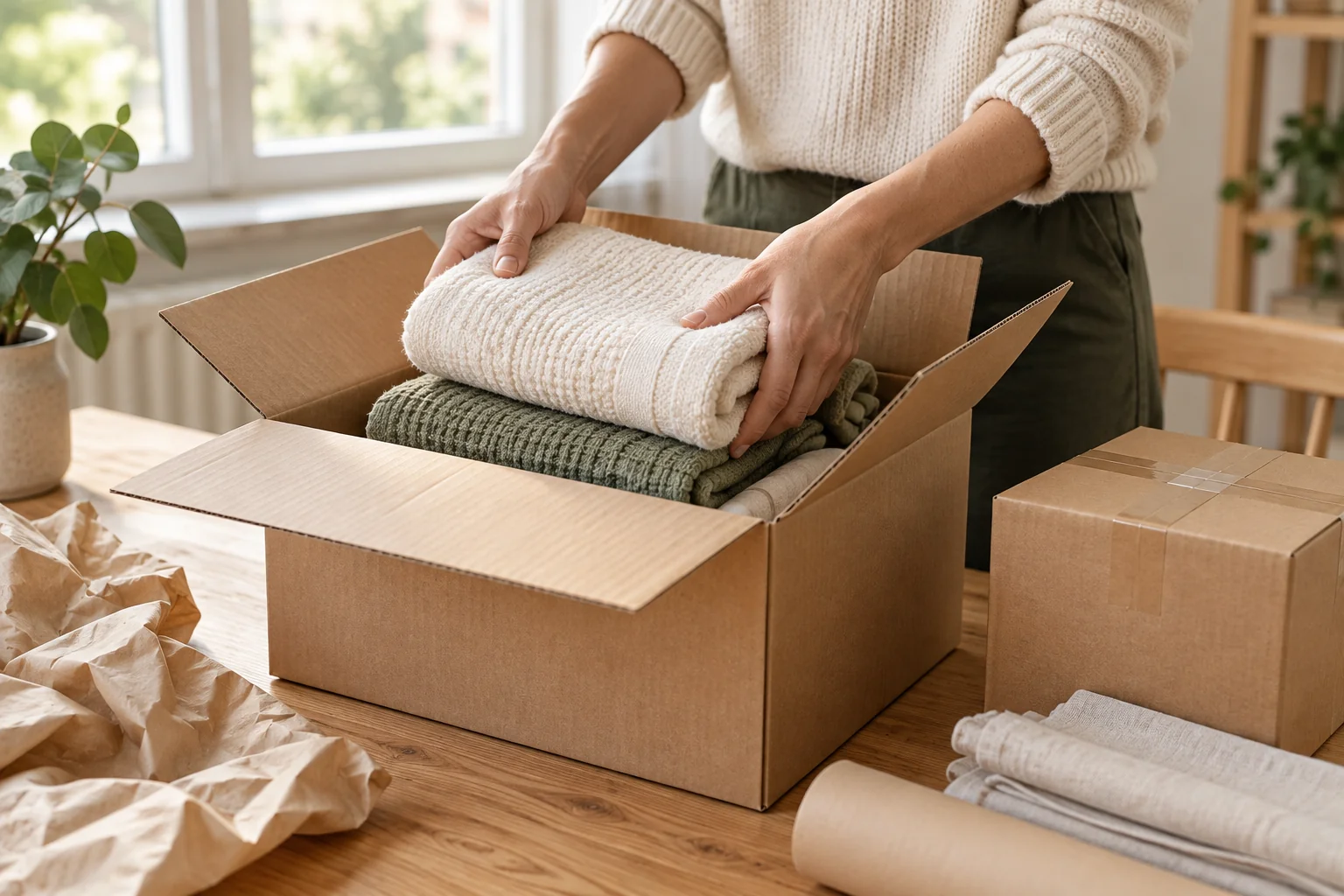
Pack one room at a time and label the side of each box with its room and contents. You can then read the labels when boxes are stacked. Use smaller boxes for heavy items such as books and larger boxes for lighter belongings.

Protect fragile items individually with suitable materials and fill gaps so the contents cannot move freely. Boxes should close properly without being overfilled and remain manageable to carry. Mark fragile contents clearly.

Empty furniture and collect loose parts. Put screws and fittings in a labelled bag when dismantling anything. Take a photo before dismantling to help with reassembly.
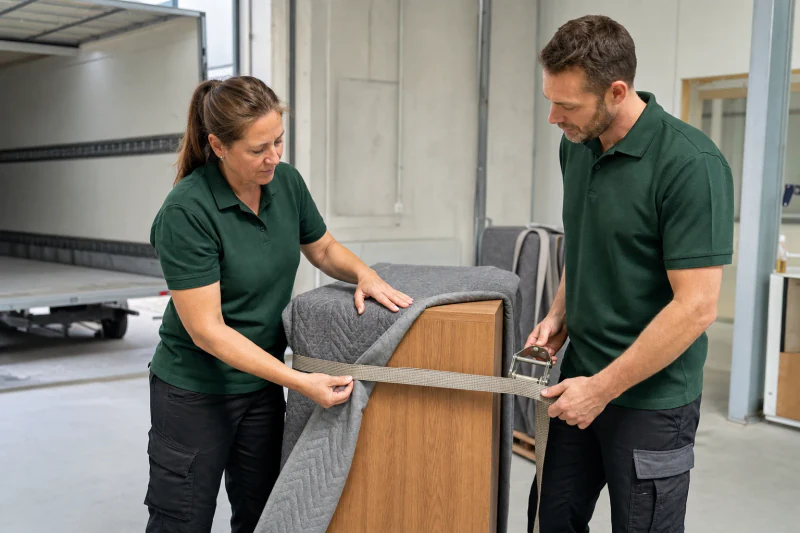
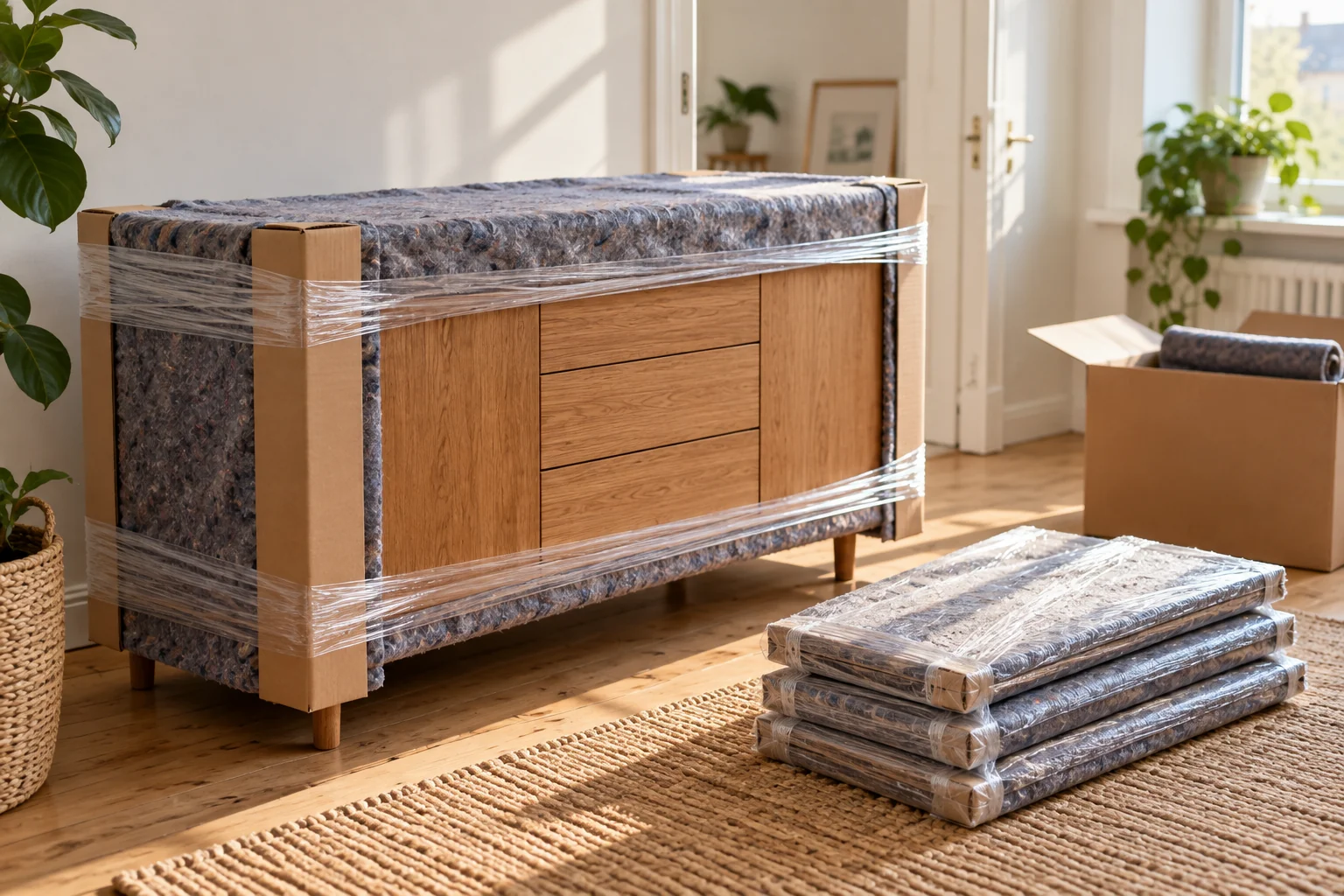
Illustrative scene of movers protecting furniture with a moving blanket
Empty furniture, collected parts and protected surfaces make belongings easier to handle.

04 · Plan transport

Agree who does what.

Use your inventory to choose a vehicle and helpers. Decide whether you will carry things yourself or need assistance from collection to delivery. Planning is easier when responsibilities are agreed in advance.

Include access details and information about unusually heavy, large or fragile items in your enquiry or booking. Clarify anything you are unsure about before moving day.

Plan a simple order: what should leave first, and what must be accessible immediately at the new address? Tell your helpers where boxes and furniture should go. Small agreements can prevent repeated questions during the move.

05 · On moving day

Keep the essentials close.

Pack a separate bag for your first day with keys, a charger, necessary personal items and something to eat and drink. Keep it apart from the boxes going into the vehicle so you know where it is.

Clear the walkways and keep your phone handy. Make sure someone can open up at both addresses and report any change of plan. A simple room plan can help everyone put things in the right place on arrival.

Finish with a walk through the old home, checking behind doors, inside cupboards and in storage spaces. At the new home, start with what you need for the first evening; everything else can be unpacked later.

Ready for moving day?

One final review.

  • The furniture and box inventory is ready.
  • Access and measurements are checked at both addresses.
  • Boxes are closed and labelled by room.
  • Transport, carrying help and key access are agreed.
  • The first-day bag is packed separately.
Find a vehicle and carrying help

Have a good move — and a good start at your new address.

Back to the blog
From plan to move

Ready for your
next move?

Calculate your price
Go to article

Get Teleporter

Choose your app store.

Welcome credit

GetDKK 100in credit when you sign up.

Open Messenger

Contact Teleporter

Choose language

Dansk

Planning

Your move.
A clear overview.

From the first packed box to the final trip. Here is what to organise before moving day begins.

About 4 min readRead the guide
Published
A man checks his moving list in a packed apartment with a clear walkway

A good moving day starts before the first box leaves your home. You do not need a complicated plan, just an overview of your belongings, access and who is doing what. Use this practical guide one step at a time.

The essentials, in brief.

  • Understand the amount to move and the access.
  • Pack by room and keep essentials separate.
  • Arrange transport and help before the day starts.

01 · Make an inventory

Start with what is coming with you.

Walk through your home and list the large items: sofa, bed, dining table, wardrobes and shelves. Add an estimate of the number of boxes. The list does not have to be perfect; it should make the job easier to explain and plan.

Divide your belongings into three groups: things to take, things to give away and things to sort out for disposal. Decide early so you are not packing around items without a destination.

02 · Check access

Measure more than the furniture.

A sofa may fit perfectly in your new living room but still struggle to get through the door. Measure the furniture and narrow points on its way out and in. Check doorways, stair turns and lift openings at both addresses.

Find out where the vehicle can park and how far everything must be carried. A long courtyard or several floors without a lift matters when planning transport and carrying help.

  • At collectionNote the floor, lift, entrance access and distance to the vehicle.
  • At deliveryMake sure you have the keys and a clear route to the rooms.
  • For large furnitureCheck beforehand whether legs, shelves or other parts can be removed.

03 · Pack carefully

Make unpacking easier.

Pack one room at a time and label the side of each box with its room and contents. You can then read the labels when boxes are stacked. Use smaller boxes for heavy items such as books and larger boxes for lighter belongings.

Protect fragile items individually with suitable materials and fill gaps so the contents cannot move freely. Boxes should close properly without being overfilled and remain manageable to carry. Mark fragile contents clearly.

Empty furniture and collect loose parts. Put screws and fittings in a labelled bag when dismantling anything. Take a photo before dismantling to help with reassembly.

Illustrative scene of movers protecting furniture with a moving blanket
Empty furniture, collected parts and protected surfaces make belongings easier to handle.

04 · Plan transport

Agree who does what.

Use your inventory to choose a vehicle and helpers. Decide whether you will carry things yourself or need assistance from collection to delivery. Planning is easier when responsibilities are agreed in advance.

Include access details and information about unusually heavy, large or fragile items in your enquiry or booking. Clarify anything you are unsure about before moving day.

Plan a simple order: what should leave first, and what must be accessible immediately at the new address? Tell your helpers where boxes and furniture should go. Small agreements can prevent repeated questions during the move.

05 · On moving day

Keep the essentials close.

Pack a separate bag for your first day with keys, a charger, necessary personal items and something to eat and drink. Keep it apart from the boxes going into the vehicle so you know where it is.

Clear the walkways and keep your phone handy. Make sure someone can open up at both addresses and report any change of plan. A simple room plan can help everyone put things in the right place on arrival.

Finish with a walk through the old home, checking behind doors, inside cupboards and in storage spaces. At the new home, start with what you need for the first evening; everything else can be unpacked later.

Ready for moving day?

One final review.

  • The furniture and box inventory is ready.
  • Access and measurements are checked at both addresses.
  • Boxes are closed and labelled by room.
  • Transport, carrying help and key access are agreed.
  • The first-day bag is packed separately.
Find a vehicle and carrying help

Have a good move — and a good start at your new address.

Back to the blog
From a good plan
to a good move.