


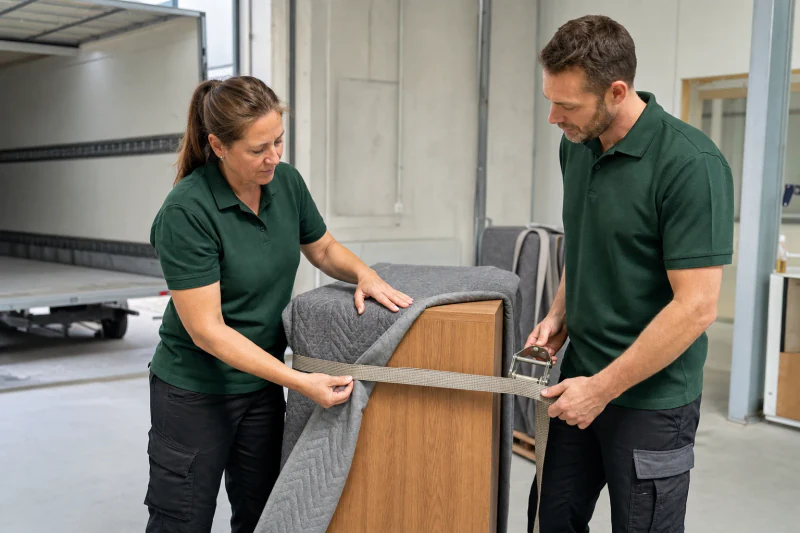
Illustration of two movers protecting furniture with a moving blanket

Packing

Give your furniture
a safer journey.

Protect corners, collect loose parts and prepare furniture before the vehicle arrives.

Calculate your price
About 2 min readRead the guide

Furniture is easier to move when it is empty, organised and protected for its material. Preparation also makes delivery simpler because everyone knows what is loose, heavy or fragile.

The essentials, in brief.

  • Empty furniture and remove loose parts before transport.
  • Keep fittings together in clearly labelled bags.
  • Mention heavy and fragile items in advance.

01 · Empty furniture

Start by removing weight and loose parts.

Empty cupboards, drawers and shelving. Loose contents can move, add weight and strain doors or runners during transport.

Remove shelves, glass panels and other detachable parts where relevant. Pack them separately and label them with the furniture name so they are easy to find again.

02 · Dismantle

Only dismantle what makes the move simpler.

Large furniture may be easier to take through doors and stairs when legs or individual sections are removed. Take photos before dismantling, especially when fittings or joints are not obvious.

Place screws and fittings in a closed, labelled bag. Do not attach the bag where it could scratch the surface or fall off during transport.

03 · Protect surfaces

Match the protection to the material.

Use suitable material around corners, edges and delicate surfaces. It should stay in place without damaging wood, fabric, lacquer or other finishes.

Secure cables, doors and moving parts so they do not hang loose. Avoid using handles as the only lifting point unless they are designed for the load.

Illustration of movers protecting furniture with a moving blanket
Prepared furniture is easier to handle and place at the new address.

04 · Special items

Mention heavy and fragile items in advance.

Describe large, heavy or especially fragile items when planning the transport. Include stairs, lifts and narrow passages at both addresses.

Clear the walkways before arrival and decide where furniture should stand. This reduces the need to move the same item repeatedly.

Ready for moving day?

One final review.

  • Cupboards, drawers and shelving are empty.
  • Loose parts and fittings are packed and labelled.
  • Corners and delicate surfaces are protected.
  • Cables and moving parts are secured.
  • Especially heavy or fragile items have been described.
Find a vehicle and carrying help

Have a good move — and a good start at your new address.

Back to the blog
From plan to move

Ready for your
next move?

Calculate your price
Go to article

Get Teleporter

Choose your app store.

Welcome credit

GetDKK 100in credit when you sign up.

Open Messenger

Contact Teleporter

Choose language

Dansk

Packing

Give your furniture
a safer journey.

Protect corners, collect loose parts and prepare furniture before the vehicle arrives.

About 2 min readRead the guide
Illustration of two movers protecting furniture with a moving blanket

Furniture is easier to move when it is empty, organised and protected for its material. Preparation also makes delivery simpler because everyone knows what is loose, heavy or fragile.

The essentials, in brief.

  • Empty furniture and remove loose parts before transport.
  • Keep fittings together in clearly labelled bags.
  • Mention heavy and fragile items in advance.

01 · Empty furniture

Start by removing weight and loose parts.

Empty cupboards, drawers and shelving. Loose contents can move, add weight and strain doors or runners during transport.

Remove shelves, glass panels and other detachable parts where relevant. Pack them separately and label them with the furniture name so they are easy to find again.

02 · Dismantle

Only dismantle what makes the move simpler.

Large furniture may be easier to take through doors and stairs when legs or individual sections are removed. Take photos before dismantling, especially when fittings or joints are not obvious.

Place screws and fittings in a closed, labelled bag. Do not attach the bag where it could scratch the surface or fall off during transport.

03 · Protect surfaces

Match the protection to the material.

Use suitable material around corners, edges and delicate surfaces. It should stay in place without damaging wood, fabric, lacquer or other finishes.

Secure cables, doors and moving parts so they do not hang loose. Avoid using handles as the only lifting point unless they are designed for the load.

Illustration of movers protecting furniture with a moving blanket
Prepared furniture is easier to handle and place at the new address.

04 · Special items

Mention heavy and fragile items in advance.

Describe large, heavy or especially fragile items when planning the transport. Include stairs, lifts and narrow passages at both addresses.

Clear the walkways before arrival and decide where furniture should stand. This reduces the need to move the same item repeatedly.

Ready for moving day?

One final review.

  • Cupboards, drawers and shelving are empty.
  • Loose parts and fittings are packed and labelled.
  • Corners and delicate surfaces are protected.
  • Cables and moving parts are secured.
  • Especially heavy or fragile items have been described.
Find a vehicle and carrying help

Have a good move — and a good start at your new address.

Back to the blog
From a good plan
to a good move.