

Transport
Building materials delivered.
Plan the whole route.
Have tiles, boards and other building materials assessed for transport. Provide total weight, longest dimensions, packaging and loading and carrying arrangements.
Agree building-material transport based on the actual products, total weight and access. Send support an order list or product specifications before choosing a van. A small batch of tiles may be heavy, while lightweight boards can require considerable space and support.
The essentials, in brief.
- Provide total weight and the longest package.
- Clarify shop loading and unloading at home.
- New materials and construction waste are different tasks.
01 · List the actual packages
List the actual packages
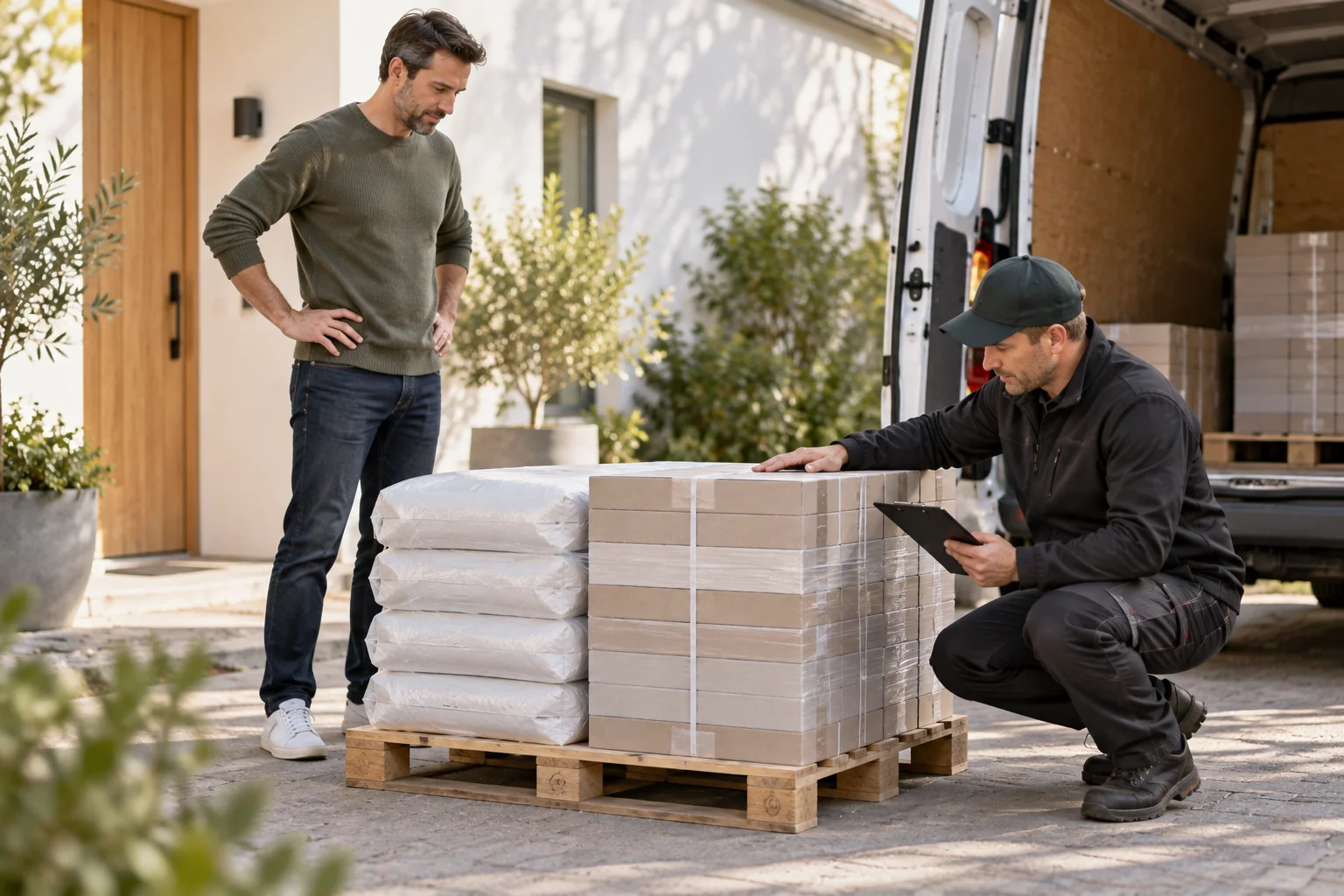
Record product name, package count, dimensions and weight per package. Calculate total weight, including pallets and packaging. Do not estimate vehicle capacity from spare floor space alone: payload and space must both suit the load.
Send the shop's order summary and a packaging photo if possible. Explain if items form an indivisible batch. Very heavy or long packages need prior assessment and are not automatically accepted because a large van can be selected in the app.
02 · Clarify loading with the shop
Clarify loading with the shop
Ask where goods are collected, when they will be ready and how they are loaded. A pallet may need a different solution from individual packages. Tell support if forklift or other equipment use is expected; do not assume it is available.
Also arrange delivery at home. Is it beside the van or carried to a particular room? Provide distance, steps and floors. Waiting at a shop counts during a local job; five free minutes apply only at the start.
03 · Protect materials according to their instructions
Protect materials according to their instructions
Retain suitable original packaging and follow manufacturer advice on support, handling and moisture. Knauf explains, among other points, that plasterboard should be lifted rather than dragged off a pallet and its edges protected. Plasterboard advice does not automatically apply to glass, tiles or every other board material.
Assess torn or damp sacks and damaged packages before loading. Disclose sharp edges and loose contents. The driver must be able to secure the load without damaging it; packaging and placement must suit both product and vehicle.
04 · Declare chemicals and waste separately
Declare chemicals and waste separately
Send names and labels if the order includes paint, glue or other chemicals. Teleporter does not carry dangerous goods. A product cannot be accepted based only on the shop name or the phrase 'building materials'; clarify uncertain contents before booking.
New materials are different from construction waste. Waste collection requires separate agreement on contents, destination and possible fees. Ordinary local pricing depends on vehicle, help and working time. Describe additional carrying indoors so sufficient help can be arranged.
Ready for moving day?
One final review.
- Send a product list with weights and dimensions.
- Clarify shop collection and loading.
- Describe the carrying route at delivery.
- Disclose chemicals and waste separately.
Have a good move — and a good start at your new address.
Back to the blog