


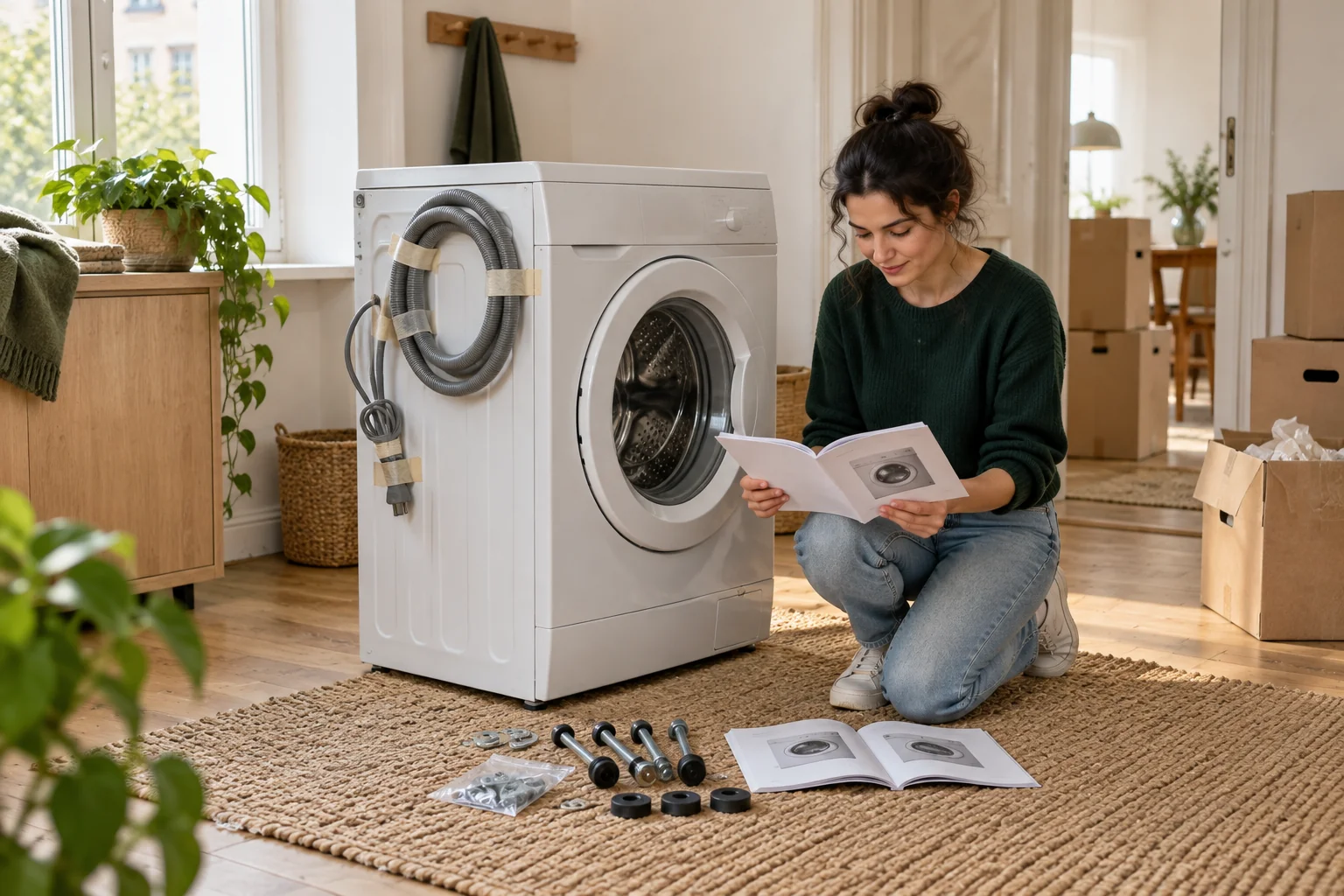
A customer reads instructions beside a disconnected washing machine with gathered hoses and transit fittings

Transport

Moving your washing machine.
Prepare it first.

Prepare your washing machine for moving: find the model instructions, arrange disconnection, drain residual water and check transit fittings and access.

Calculate your price
About 3 min readRead the guide
Published

Before moving a washing machine, clarify disconnection, residual water and transit fittings using the instructions for that exact model. Also provide its weight, floor and access details. Booking transport does not automatically mean the driver can disconnect or install the appliance.

The essentials, in brief.

  • Find the model number and transport instructions.
  • Deal with water and transit fittings before collection.
  • Arrange disconnection help separately.

01 · Find the manual and correct fittings

Find the manual and correct fittings

Photograph the rating plate and find the manufacturer's moving instructions. Check whether you still have the original transit fittings. Bosch describes the transit lock as protection during transport and recommends retaining it for a later move.

Use only fittings and procedures suitable for your model. Bolt numbers and locations differ between machines. If fittings are missing, contact the manufacturer or retailer before booking a van; do not improvise a fixing inside the appliance.

02 · Plan disconnection and draining

Plan disconnection and draining

The appliance must be emptied and prepared for transport. Follow the model instructions for disconnecting electricity, water supply and drainage, and for draining residual water. Protect the floor and have a suitable container ready. This guide is not an installation manual.

If the connection requires professional help, arrange it before moving day. Tell support about a built-in machine, a dryer stacked above it or other access difficulties. Work requiring statutory authorisation must be done by an appropriately authorised professional.

03 · Prepare the appliance and carrying route

Prepare the appliance and carrying route

Following the manufacturer's instructions, secure hoses and the cable so they do not hang loose or become trapped. Protect the exterior with suitable packaging. Tell the team about loose or damaged parts before lifting.

Measure the appliance, doorways and staircase turns at both addresses. Provide the weight from product specifications if available. Book help appropriate to the job: a washing machine is not automatically safe for one person to lift, and a lift needs sufficient space and load capacity.

04 · Agree the work and prepare for use after delivery

Agree the work and prepare for use after delivery

Contact support beforehand if you need preparation or connection help. This depends on a suitable team being available for the agreed work. On a local move, agreed extra work forms part of the paid time; it is not a free included service.

After delivery, remove transit fittings according to the model instructions before using the appliance. Have it installed and checked correctly. Keep the fittings for the next move and resolve any uncertainty with the manufacturer or a qualified professional.

Ready for moving day?

One final review.

  • Find the model number and manual.
  • Arrange disconnection and draining.
  • Check the transit fittings.
  • Provide weight, floor and access details.
Find a vehicle and carrying help

Have a good move — and a good start at your new address.

Back to the blog
From plan to move

Ready for your
next move?

Calculate your price
Go to article

Get Teleporter

Choose your app store.

Welcome credit

GetDKK 100in credit when you sign up.

Open Messenger

Contact Teleporter

Choose language

Dansk

Transport

Moving your washing machine.
Prepare it first.

Prepare your washing machine for moving: find the model instructions, arrange disconnection, drain residual water and check transit fittings and access.

About 3 min readRead the guide
Published
A customer reads instructions beside a disconnected washing machine with gathered hoses and transit fittings

Before moving a washing machine, clarify disconnection, residual water and transit fittings using the instructions for that exact model. Also provide its weight, floor and access details. Booking transport does not automatically mean the driver can disconnect or install the appliance.

The essentials, in brief.

  • Find the model number and transport instructions.
  • Deal with water and transit fittings before collection.
  • Arrange disconnection help separately.

01 · Find the manual and correct fittings

Find the manual and correct fittings

Photograph the rating plate and find the manufacturer's moving instructions. Check whether you still have the original transit fittings. Bosch describes the transit lock as protection during transport and recommends retaining it for a later move.

Use only fittings and procedures suitable for your model. Bolt numbers and locations differ between machines. If fittings are missing, contact the manufacturer or retailer before booking a van; do not improvise a fixing inside the appliance.

02 · Plan disconnection and draining

Plan disconnection and draining

The appliance must be emptied and prepared for transport. Follow the model instructions for disconnecting electricity, water supply and drainage, and for draining residual water. Protect the floor and have a suitable container ready. This guide is not an installation manual.

If the connection requires professional help, arrange it before moving day. Tell support about a built-in machine, a dryer stacked above it or other access difficulties. Work requiring statutory authorisation must be done by an appropriately authorised professional.

03 · Prepare the appliance and carrying route

Prepare the appliance and carrying route

Following the manufacturer's instructions, secure hoses and the cable so they do not hang loose or become trapped. Protect the exterior with suitable packaging. Tell the team about loose or damaged parts before lifting.

Measure the appliance, doorways and staircase turns at both addresses. Provide the weight from product specifications if available. Book help appropriate to the job: a washing machine is not automatically safe for one person to lift, and a lift needs sufficient space and load capacity.

04 · Agree the work and prepare for use after delivery

Agree the work and prepare for use after delivery

Contact support beforehand if you need preparation or connection help. This depends on a suitable team being available for the agreed work. On a local move, agreed extra work forms part of the paid time; it is not a free included service.

After delivery, remove transit fittings according to the model instructions before using the appliance. Have it installed and checked correctly. Keep the fittings for the next move and resolve any uncertainty with the manufacturer or a qualified professional.

Ready for moving day?

One final review.

  • Find the model number and manual.
  • Arrange disconnection and draining.
  • Check the transit fittings.
  • Provide weight, floor and access details.
Find a vehicle and carrying help

Have a good move — and a good start at your new address.

Back to the blog

From a good plan
to a good move.